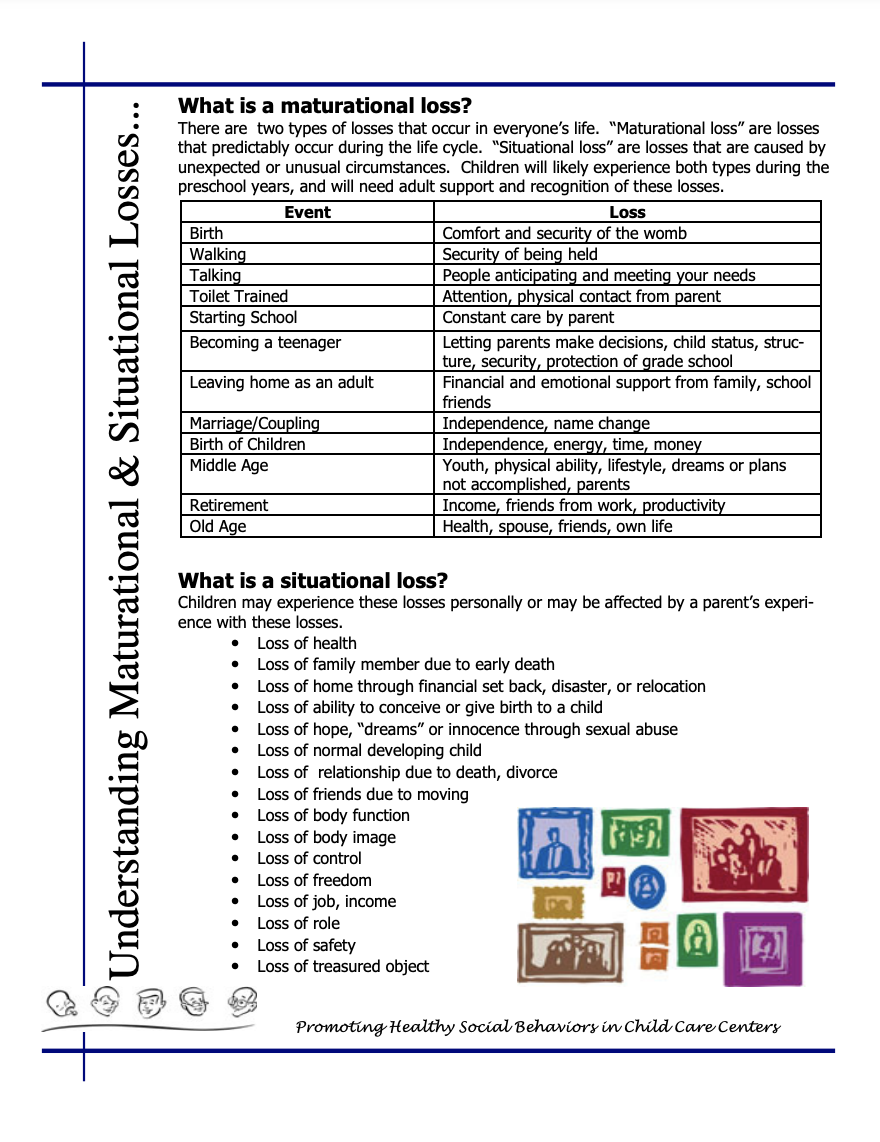
There are two types of losses that occur in everyone’s life. “Maturational losses” predictably occur during the life cycle. “Situational losses” are caused by unexpected or unusual circumstances. Children will likely experience both types during the preschool years, and will need adult support and recognition of these losses.
Resource Type: Guidance
Understanding What Grief and Loss Looks Like to a Preschooler
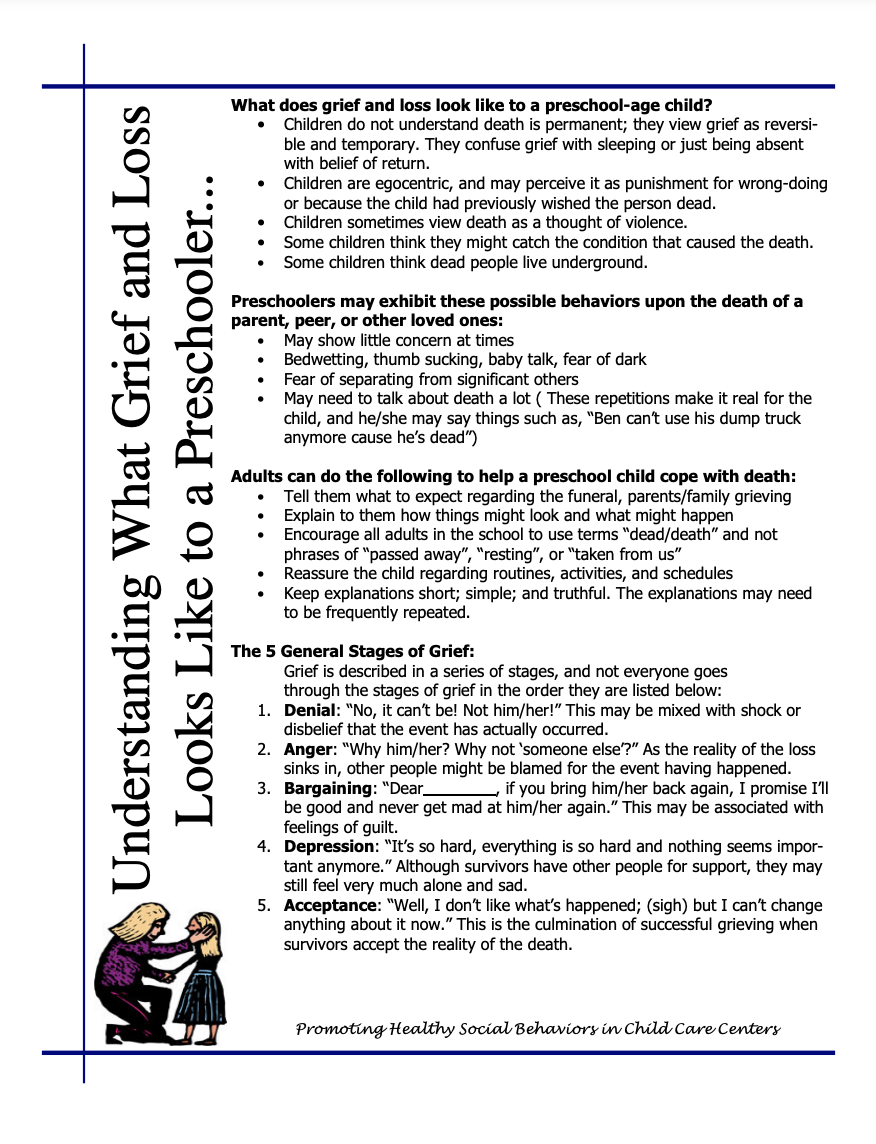
Learn what grief and loss looks like to a preschool-age child, and what you can do to help.
When a Friend Dies
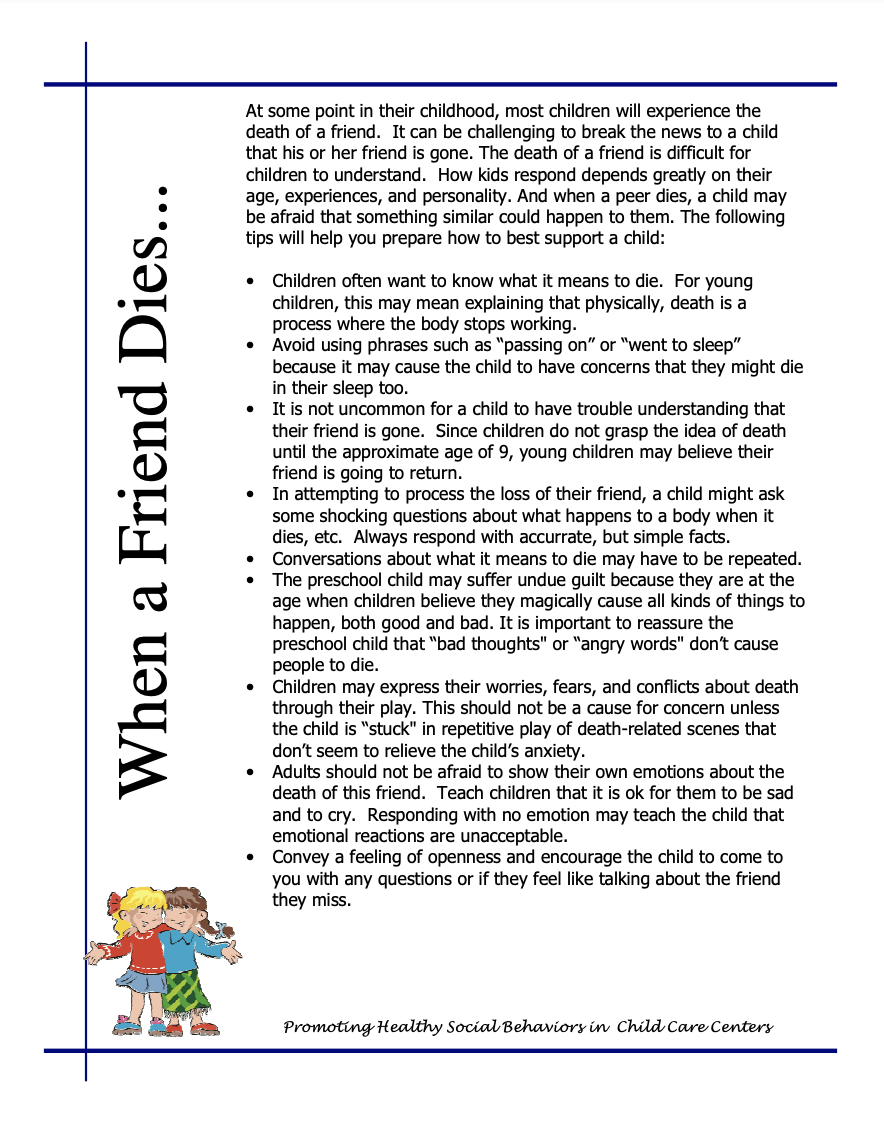
At some point in their childhood, most children will experience the death of a friend. It can be challenging to break the news to a child that his or her friend is gone. The death of a friend is difficult for children to understand. How kids respond depends greatly on their age, experiences, and personality.… Continue reading When a Friend Dies
When a Grandparent Dies
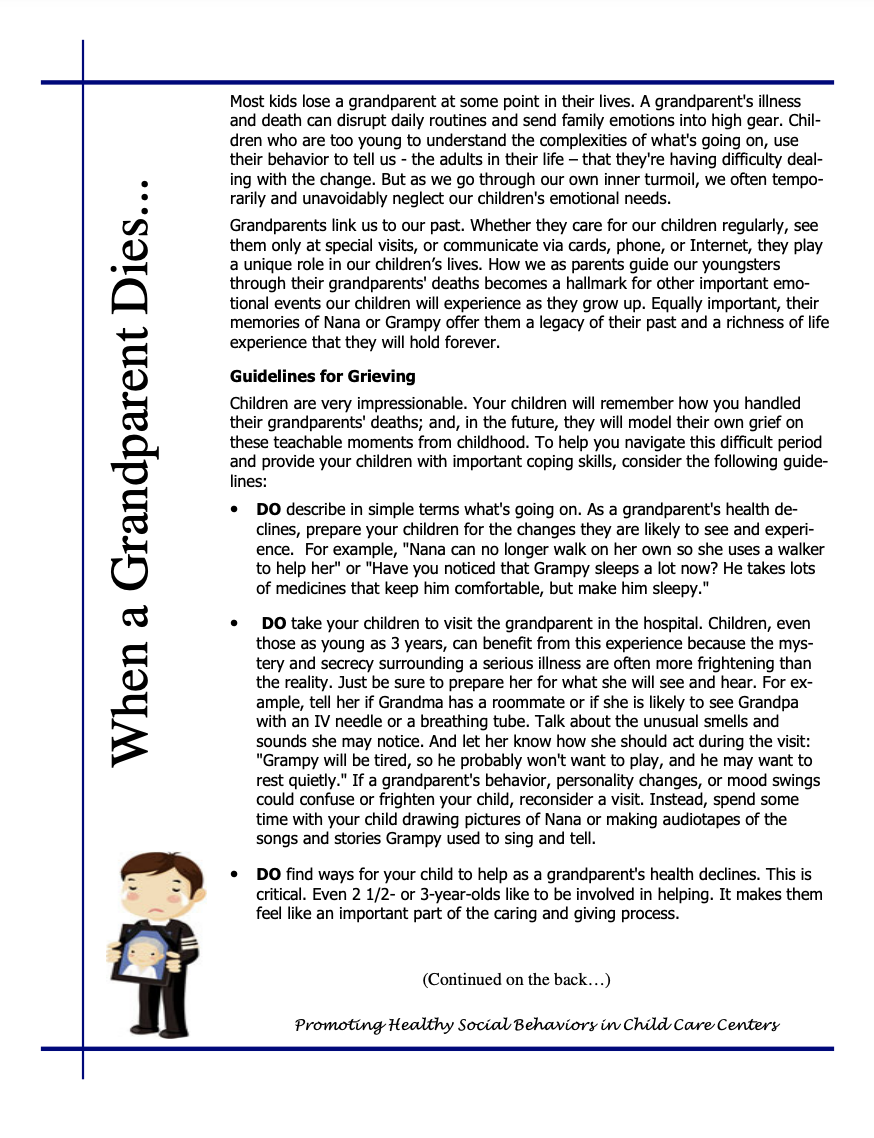
Most kids lose a grandparent at some point in their lives. A grandparent’s illness and death can disrupt daily routines and send family emotions into high gear. Children who are too young to understand the complexities of what’s going on use their behavior to tell the adults in their life that they’re having difficulty dealing… Continue reading When a Grandparent Dies
Helping a Child Cope with Stress
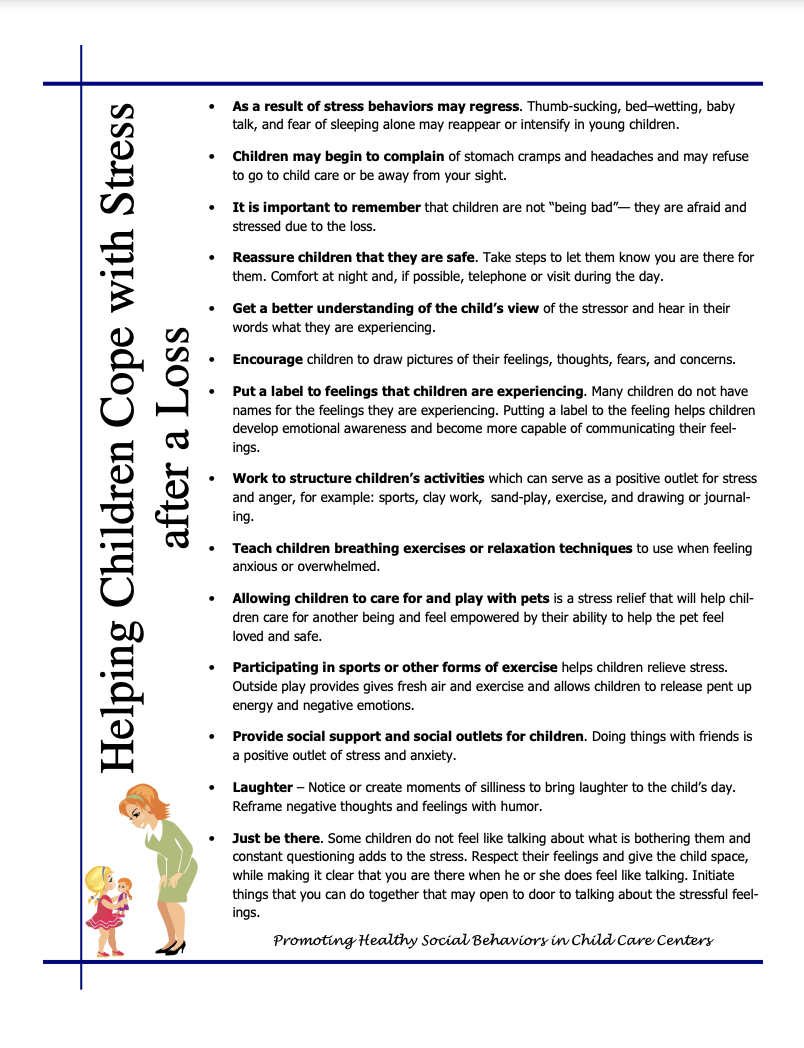
A variety of helpful tips for helping children cope with stress, especially after a loss.
Helping a Child Cope With the Loss of a Teacher or Classmate
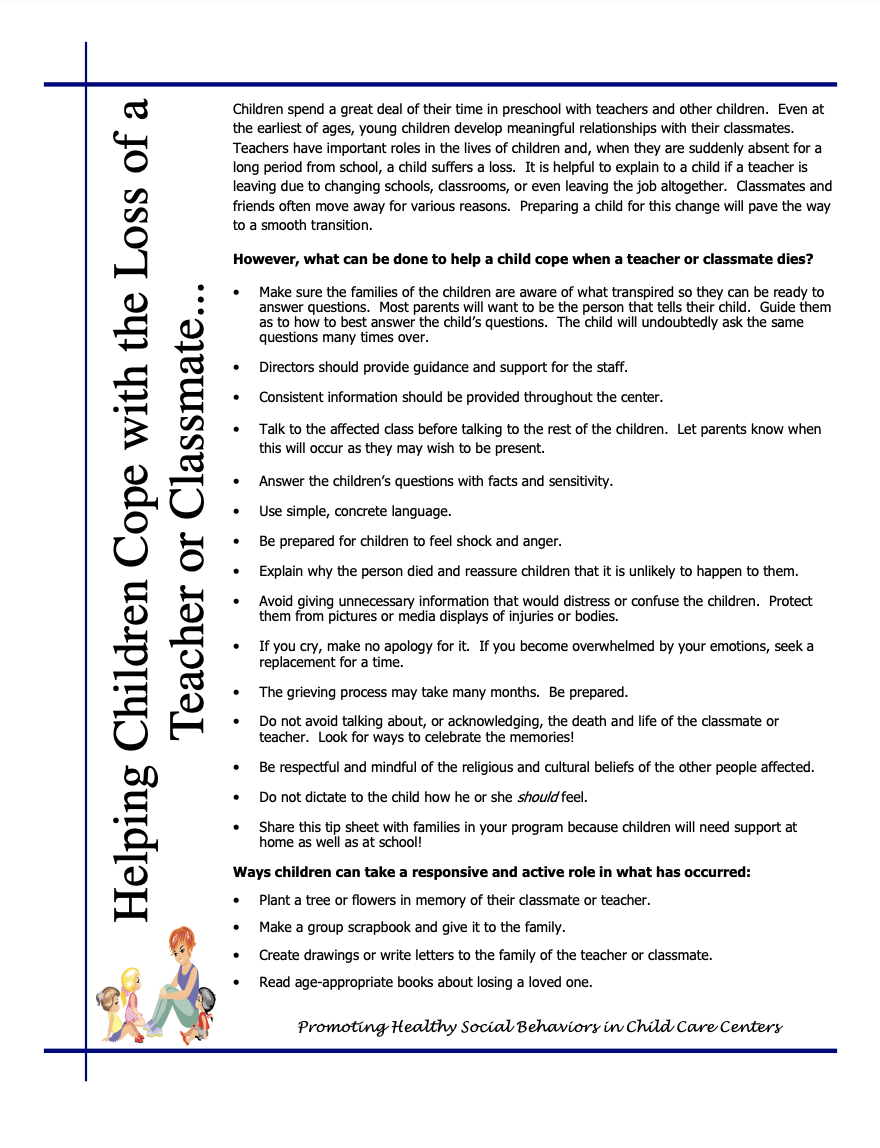
Children spend a great deal of their time in preschool with teachers and other children. Even at the earliest of ages, young children develop meaningful relationships with their classmates. Teachers have important roles in the lives of children and when they are suddenly absent for a long period from school a child suffers a loss.… Continue reading Helping a Child Cope With the Loss of a Teacher or Classmate
Helping a Child Cope With the Serious Illness of a Family Member

Young children can have a hard time understanding illness and disease. Because they can really only understand what they can observe with their senses, it is very difficult for them to understand the biology of the body and how illness effects the person. The child may feel responsible for the family member’s illness and may… Continue reading Helping a Child Cope With the Serious Illness of a Family Member
How Caring Adults Can Support a Grieving Young Child

Children need lots of love and support from the caring adults in their life to cope with the loss and reach constructive grief resolution. When talking with children about death, adults should speak on the child’s developmental level, be respectful of cultural backgrounds, and show sensitivity towards the situation. Listen to what the child is… Continue reading How Caring Adults Can Support a Grieving Young Child
How to Communicate Cross-Culturally with Parents

During times of stress, such as that which accompanies grief and loss, be aware of the way your culture (and that of parents), affects your ability to communicate effectively and with sensitivity. The expression of grief and loss will look very different within every family. Culturally diverse rituals and traditions may create mixed signals and… Continue reading How to Communicate Cross-Culturally with Parents
How to Talk to Kids About Death
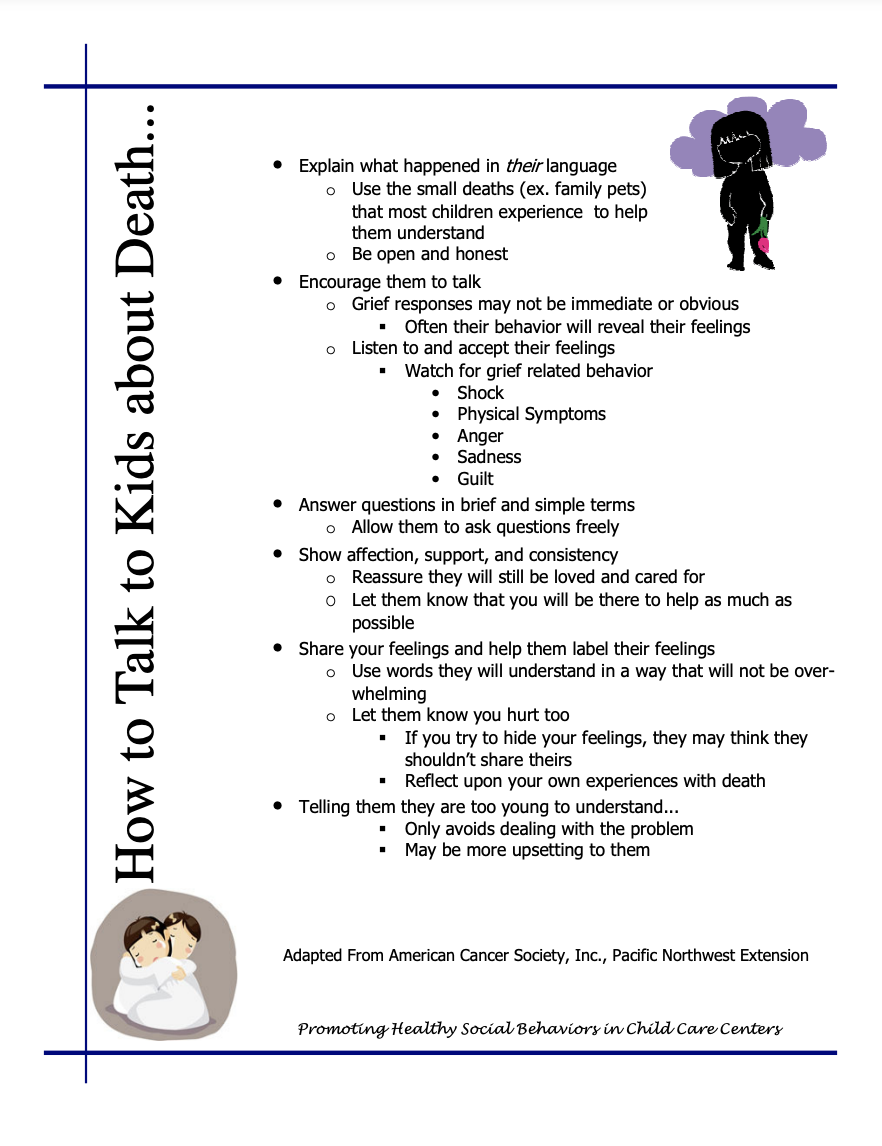
Tips for talking to children about death.