
The Ages & Stages Questionnaires® (ASQ®) provides reliable, accurate developmental and social-emotional screening for children between birth and age 6. Drawing on parents’ expert knowledge, ASQ has been specifically designed to pinpoint developmental progress and catch delays in young children—paving the way for meaningful next steps in learning, intervention, or monitoring.
Resource Type: Guidance
Resources for Opening and Running a Successful Family Child Care Home

Are you interested in opening a family child care home? Are you already running a family child care home and looking for additional resources? Child Care Aware provides guidance to learn about the steps you’ll need to take to be successful and will provide resources to ensure your program is providing a high-quality learning experience… Continue reading Resources for Opening and Running a Successful Family Child Care Home
When a Parent Loses a Limb or Loss of Ability
It can be very scary when a parent loses the ability to interact as they use to with a child due to loss of a limb. It can frighten children and is often hard for them to understand. Being prepared to help children adjust can alleviate stress and anxiety from the already sensitive situation.
When a Pet Dies
For many children, pet death is the first time they will experience grief and loss. Children’s reactions to the death of a pet will depend upon their age and developmental level. Guiding children through the loss of a beloved pet in a positive way will help them to handle grief in the future.
When a Sibling Dies
In the aftermath of the death of a sibling, a child needs answers but often does not know how to ask the questions. This guide contains helpful tips for child care providers and parents.
When Children Are Placed in Foster Care
When children are removed from their families due to abuse and/or neglect, there are five emotions that most children who are in foster care typically experience: confusion, anger, ambivalence/mixed feelings, fantasizing/wishful thinking and identification with their birth family. In this guide, you’ll find suggestions suggestions for helping a child navigate these emotions.
Understanding Maturational and Situational Losses
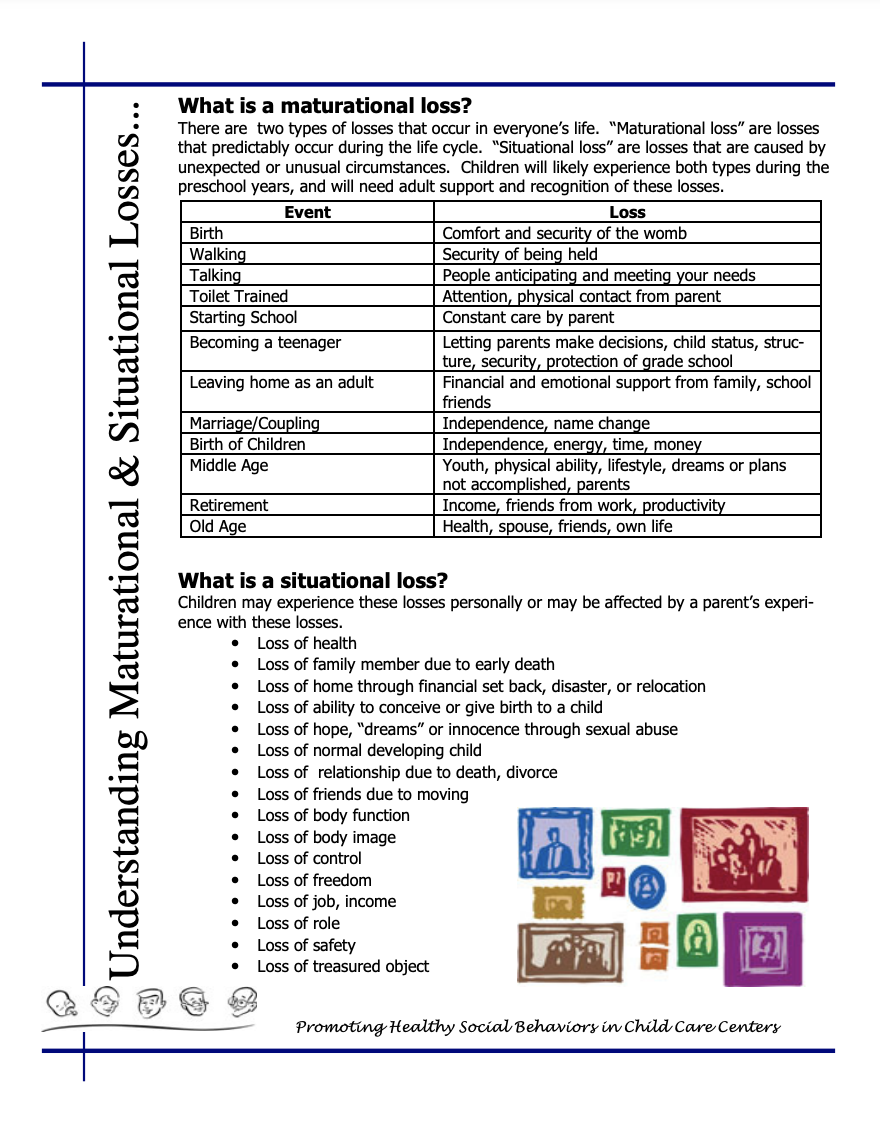
There are two types of losses that occur in everyone’s life. “Maturational losses” predictably occur during the life cycle. “Situational losses” are caused by unexpected or unusual circumstances. Children will likely experience both types during the preschool years, and will need adult support and recognition of these losses.
Understanding What Grief and Loss Looks Like to a Preschooler
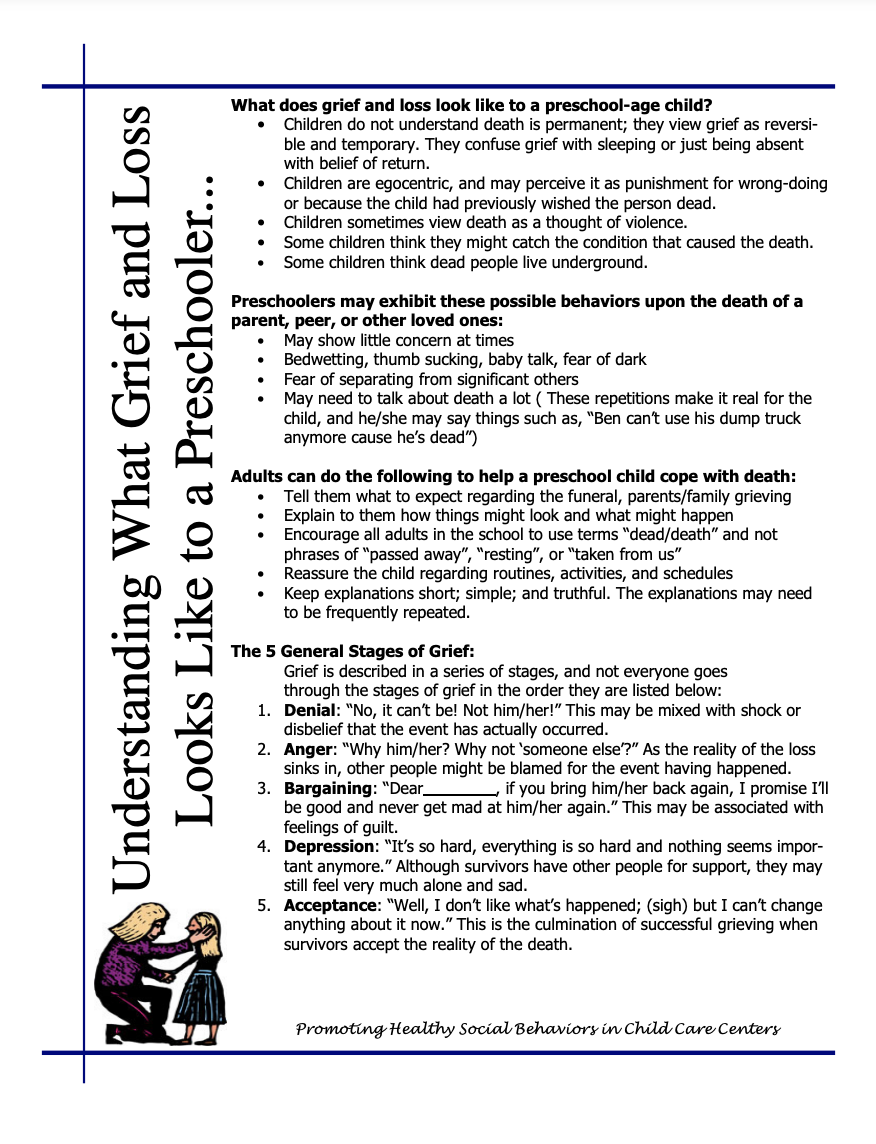
Learn what grief and loss looks like to a preschool-age child, and what you can do to help.
When a Friend Dies
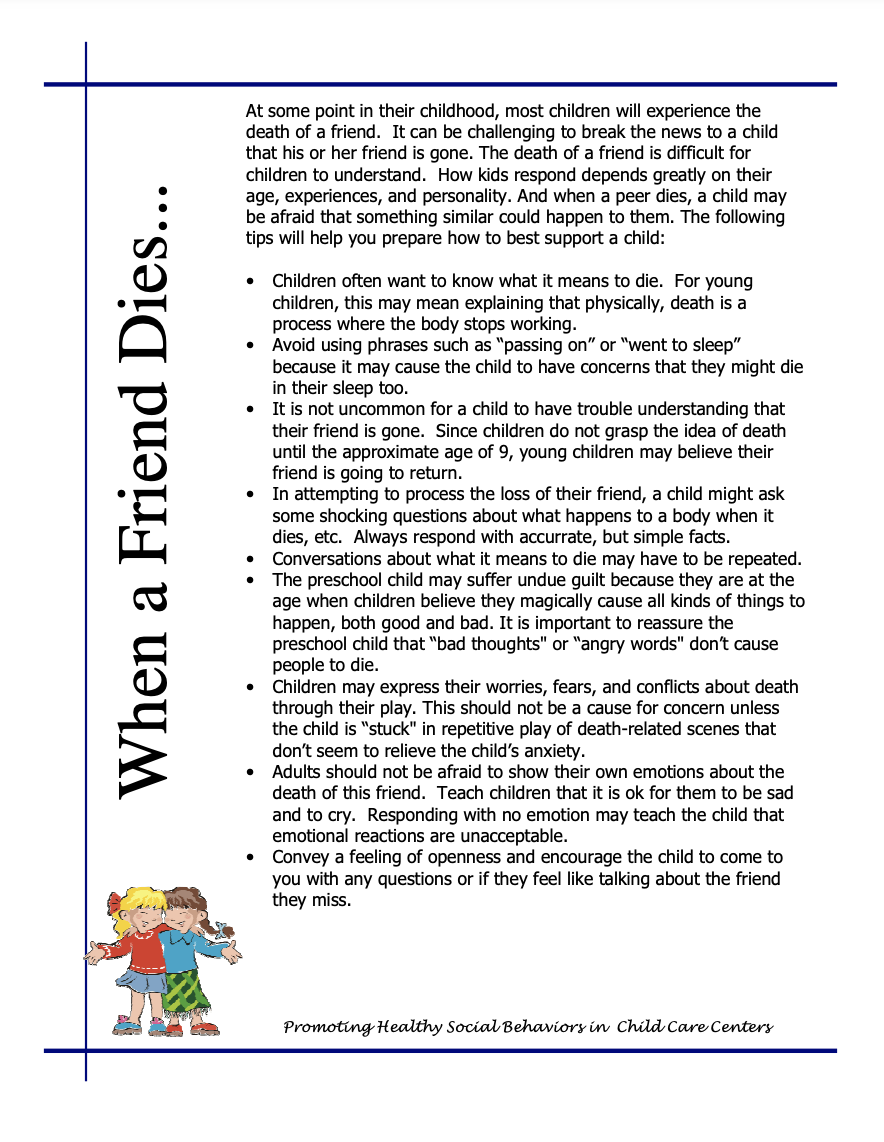
At some point in their childhood, most children will experience the death of a friend. It can be challenging to break the news to a child that his or her friend is gone. The death of a friend is difficult for children to understand. How kids respond depends greatly on their age, experiences, and personality.… Continue reading When a Friend Dies
When a Grandparent Dies
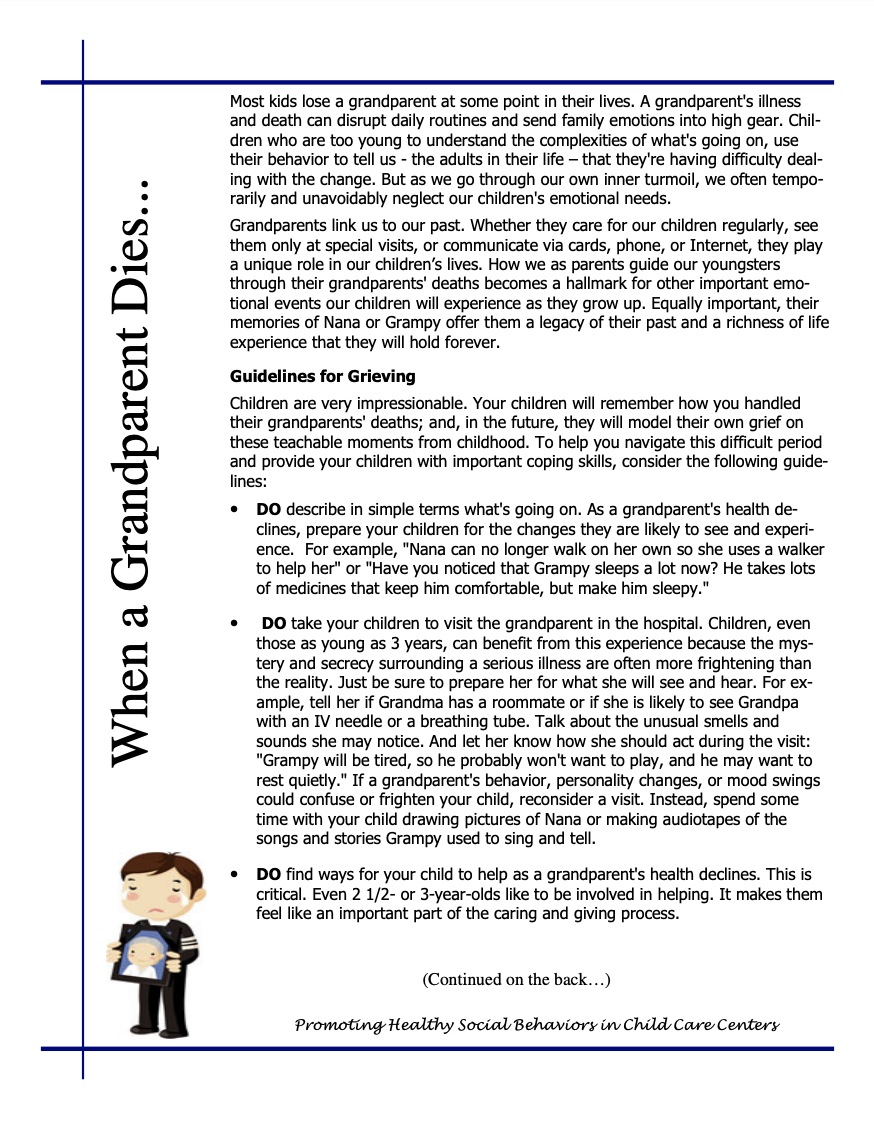
Most kids lose a grandparent at some point in their lives. A grandparent’s illness and death can disrupt daily routines and send family emotions into high gear. Children who are too young to understand the complexities of what’s going on use their behavior to tell the adults in their life that they’re having difficulty dealing… Continue reading When a Grandparent Dies