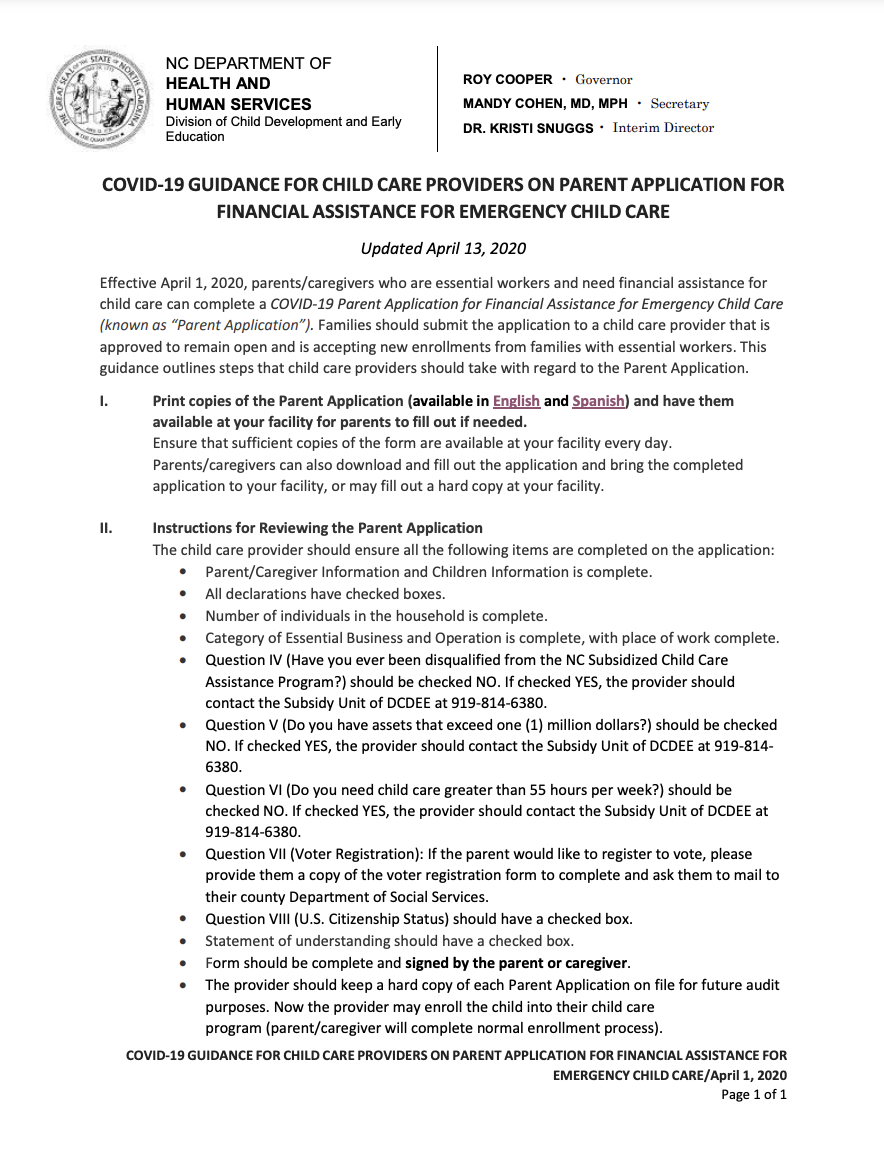
Effective April 1, 2020, parents/caregivers who are essential workers and need financial assistance for child care can complete a COVID-19 Parent Application for Financial Assistance for Emergency Child Care (known as “Parent Application”). Families should submit the application to a child care provider that is approved to remain open and is accepting new enrollments from… Continue reading COVID-19 Guidance for Providers for Parent Application for Emergency Financial Assistance
Audience Category: For Child Care Providers
Ut enim ad minim veniam, quis nostrud exercitation ullamco laboris nisi ut aliquip ex ea commodo consequat.
New Yale Study: COVID-19 Transmission in US Child Care Programs
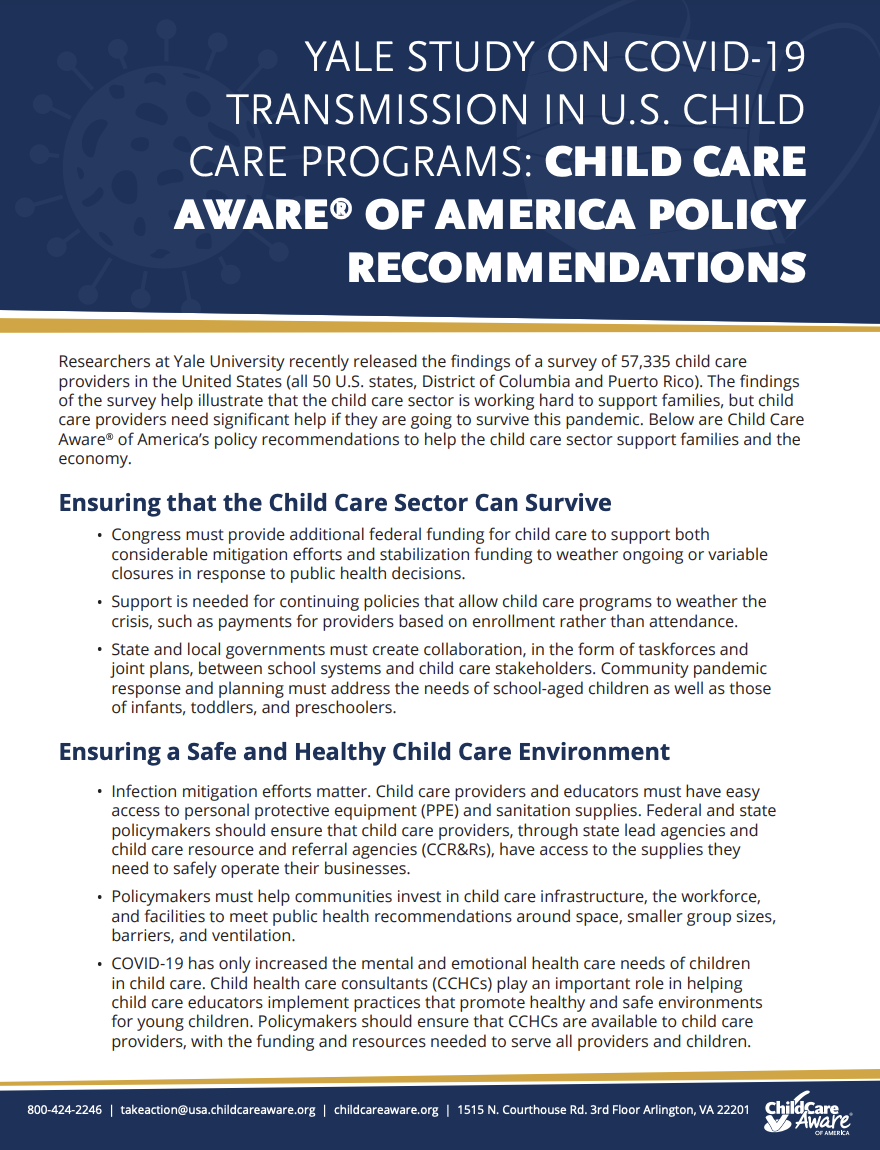
Researchers at Yale University recently released the findings of a survey of 57,335 child care providers in the United States (all 50 U.S. states, District of Columbia and Puerto Rico). The findings of the survey help illustrate that the child care sector is working hard to support families, but child care providers need significant help… Continue reading New Yale Study: COVID-19 Transmission in US Child Care Programs
School Age Update – Fall 2020
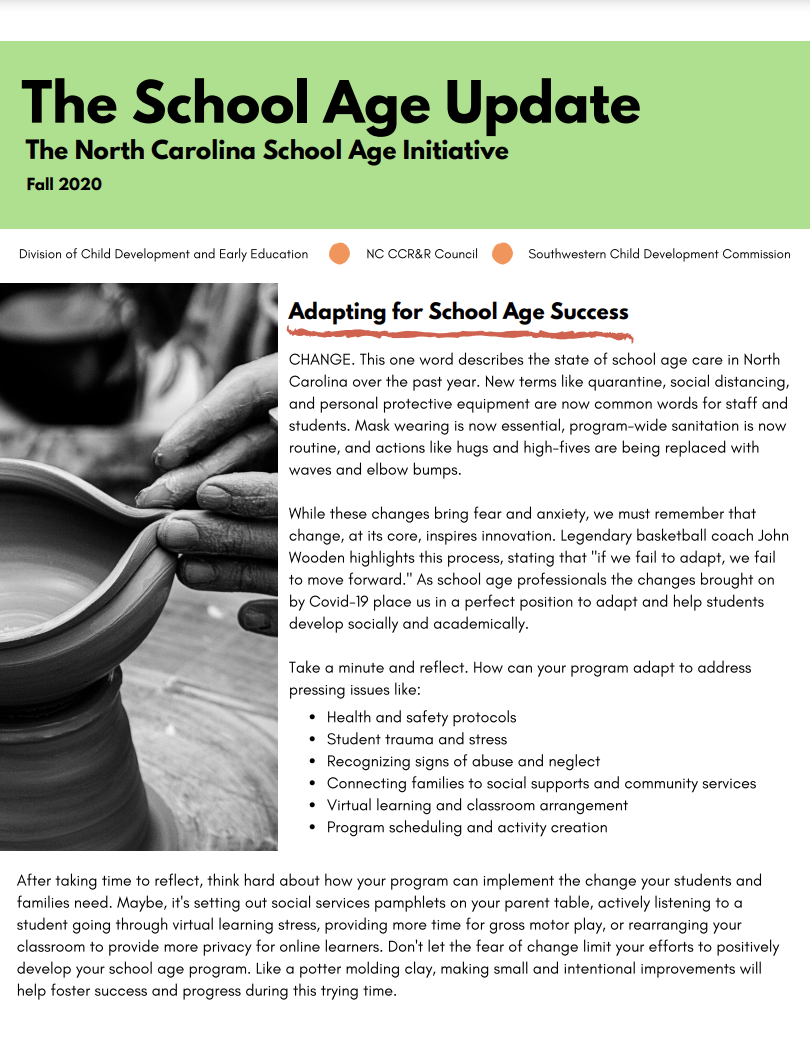
Quarterly newsletter for The North Carolina School Age Initiative.
Powerful Trauma-Sensitive Practices You Need To Know by Jon Williams

American youth are in the midst of a psychological crisis. From dealing with the pressures of a global pandemic and enduring the stress of racial injustice to coping with the everyday struggles of life, young people in the United States are experiencing an unprecedented amount of personal trauma.
7 Keys to Starting a Successful School Age Program
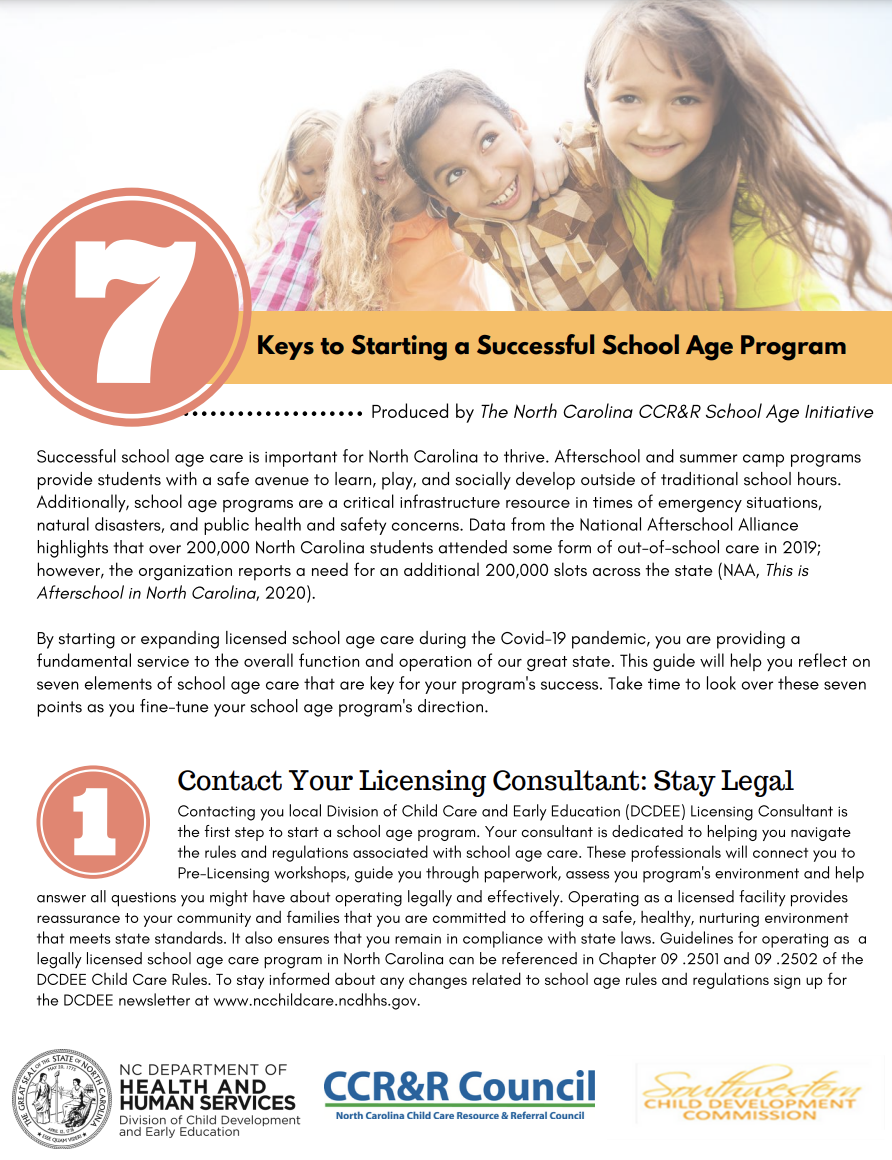
Successful school age care is important for North Carolina to thrive. Afterschool and summer camp programs provide students with a safe avenue to learn, play, and socially develop outside of traditional school hours. Additionally, school age programs are a critical infrastructure resource in times of emergency situations, natural disasters, and public health and safety concerns.… Continue reading 7 Keys to Starting a Successful School Age Program
School Age Update – Summer 2020
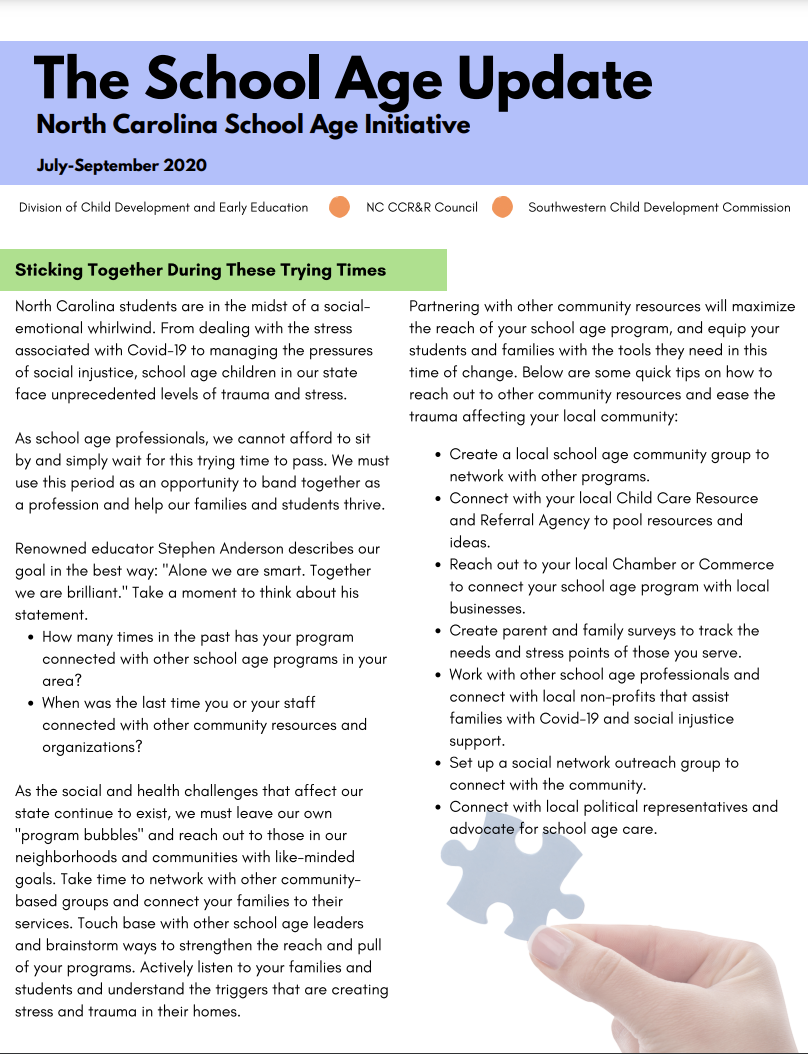
Quarterly newsletter for The North Carolina School Age Initiative.
Revised Recap of Covid-19 Resources – 6/29/2020
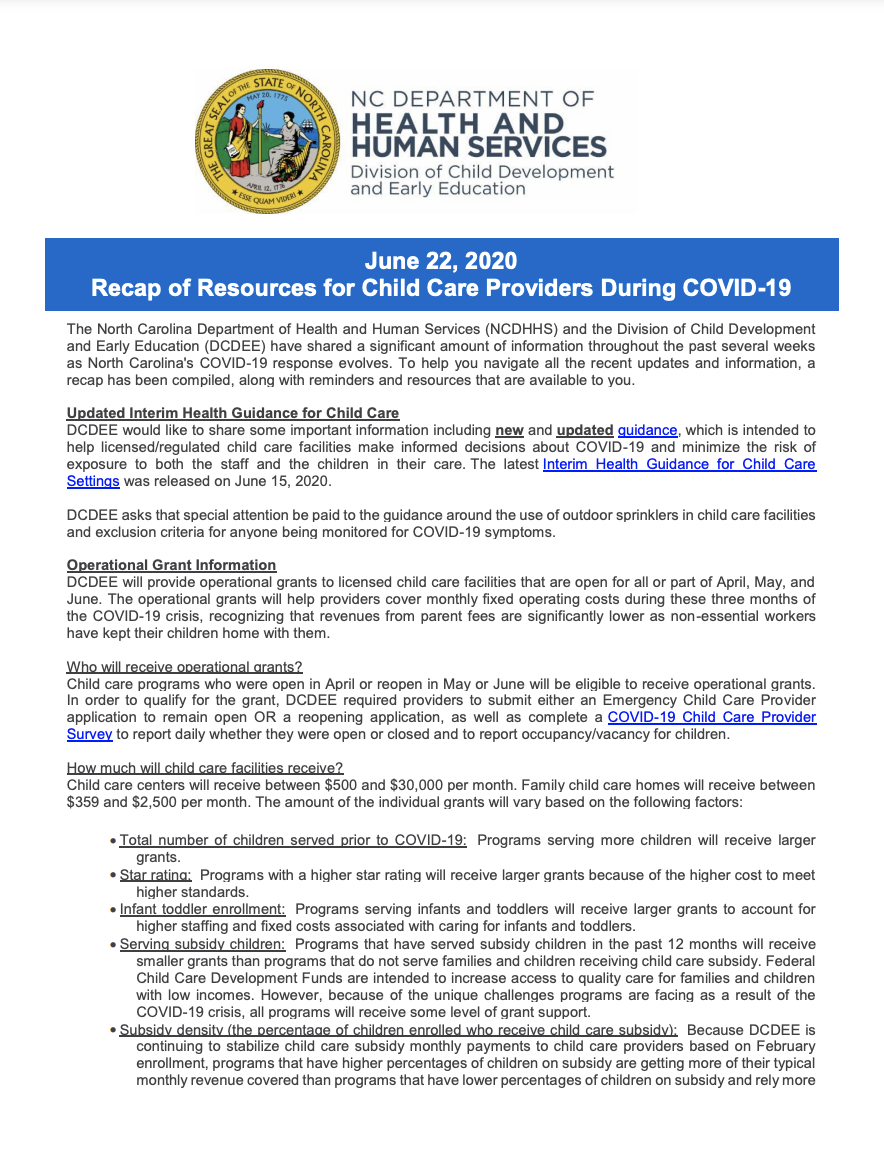
Recap of resources for child care providers during COVID-19.
2020 Statewide HSB Map/Specialists/Resource Lists
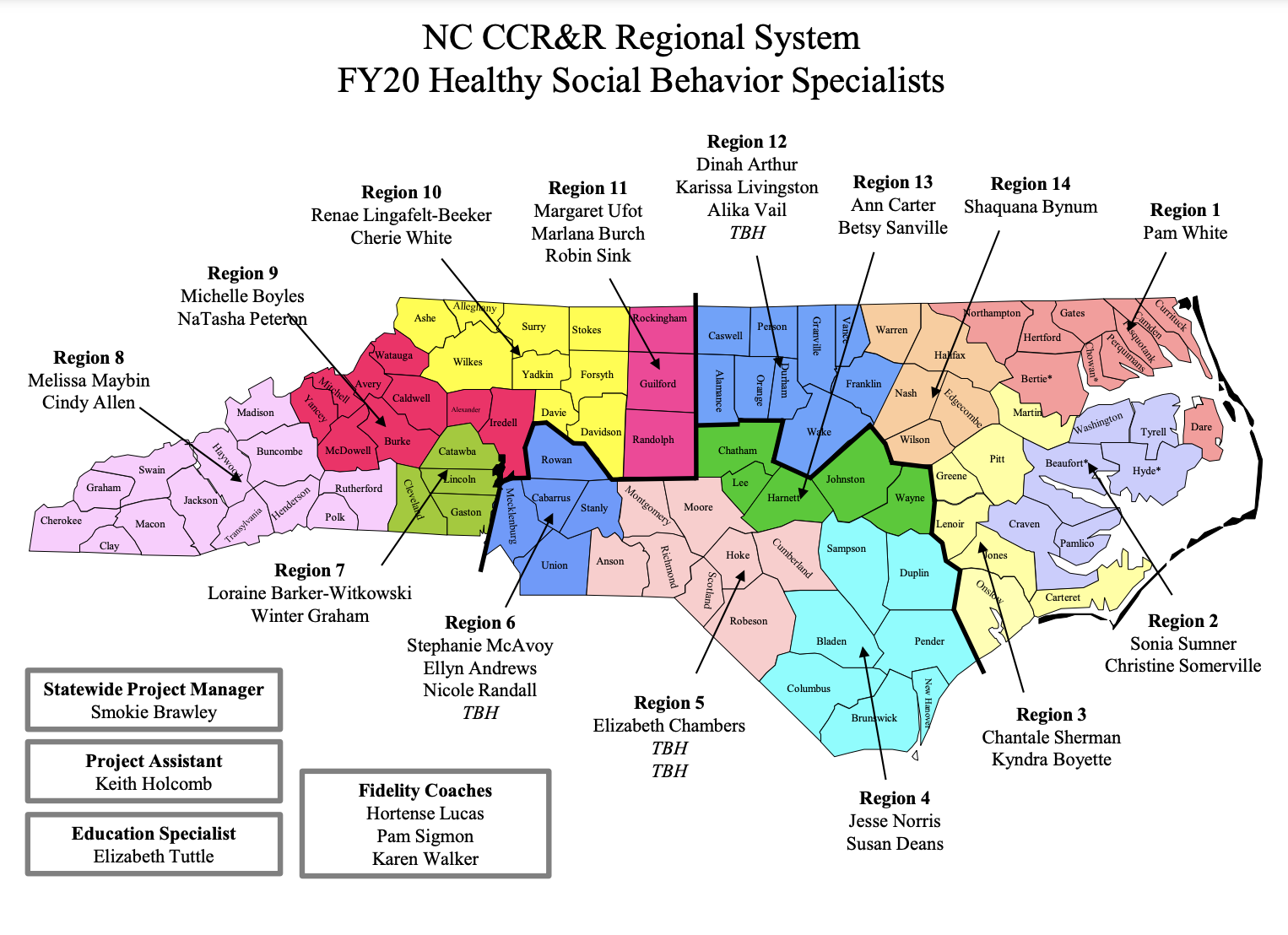
NC CCR&R Regional System FY20 Healthy Social Behavior Specialists with contact information.
COVID-19 Frequently Asked Questions for Providers from NC DHHS
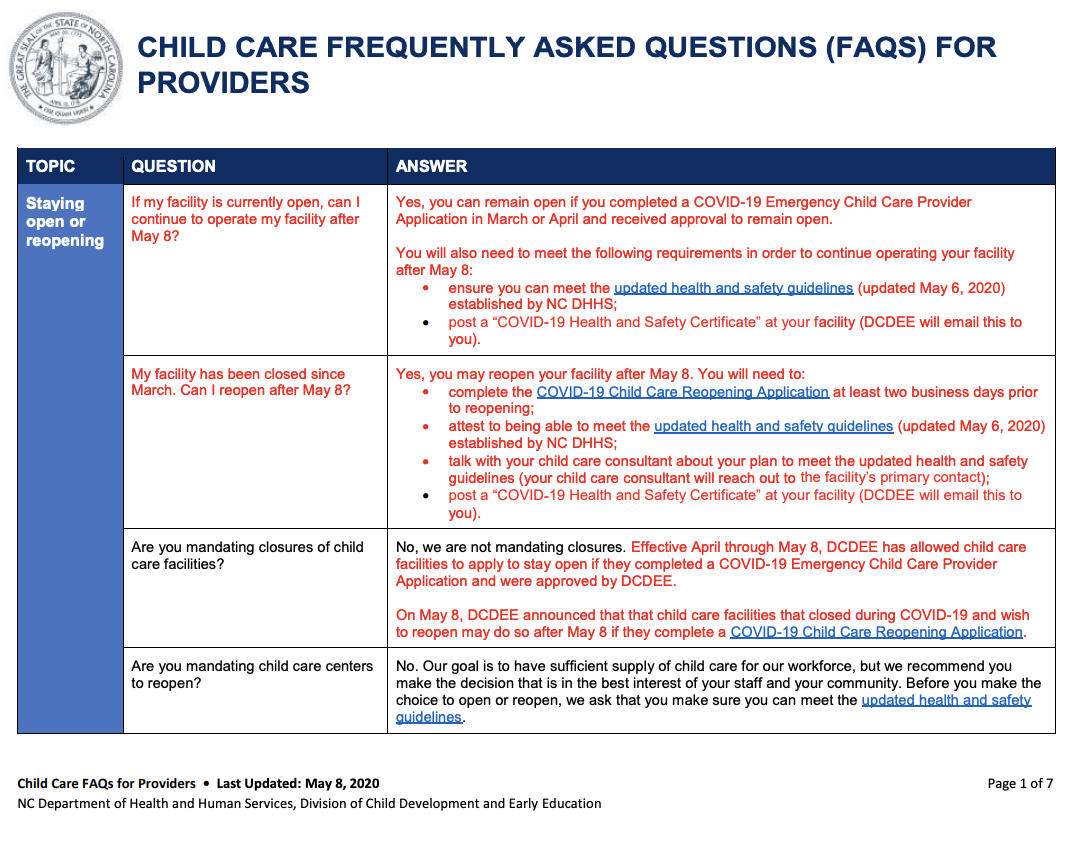
FAQs for child care providers on a range of topics related to COVID-19.
COVID-19: Tips to Navigate Federal Relief Options For Family Child Care Providers (WEBINAR)
Tips covering the Child Care & Development Block Grant, Small Business Administration (SBA) Programs and Unemployment Compensation. Register to view the webinar.