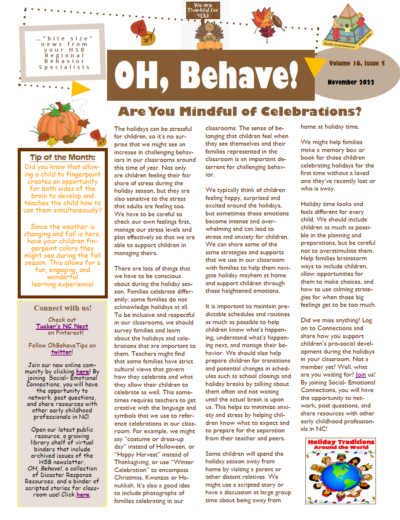
The newsletter of the Healthy Social Behaviors Project, Volumn 16, Issue 5 – November 2022.
Topic: Social-Emotional
Healthy Social Behaviors Project Helps Licensed Child Care Centers Reduce Reliance on Suspensions and Expulsions

Since 2005 the Healthy Social Behaviors (HSB) project has been a resource for teachers in North Carolina’s licensed child care centers when they need help managing children who exhibit challenging behaviors.
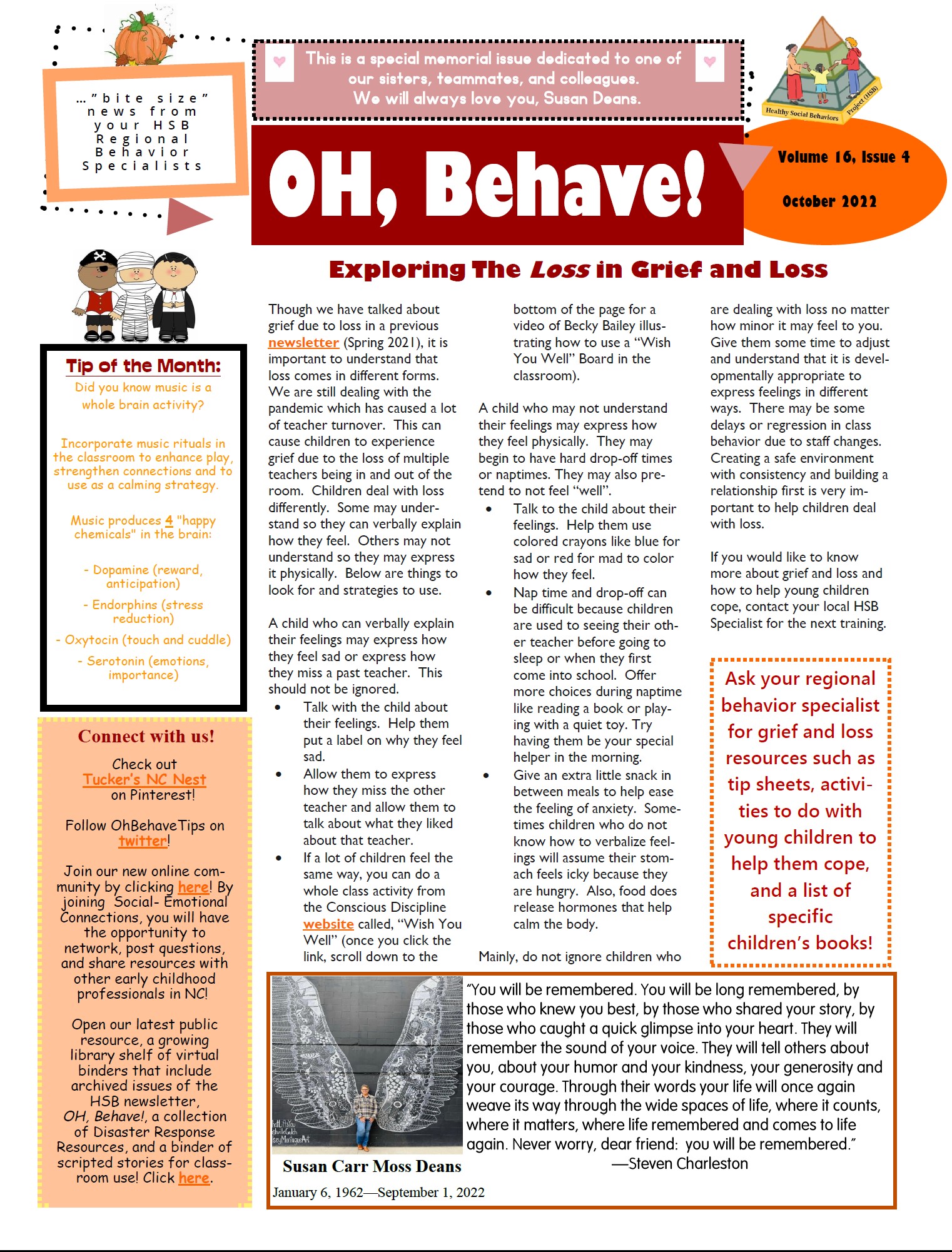
Oh Behave! HSB Newsletter, October 2022
HSB Project Recognized for Its’ Work in Reducing Expulsions!
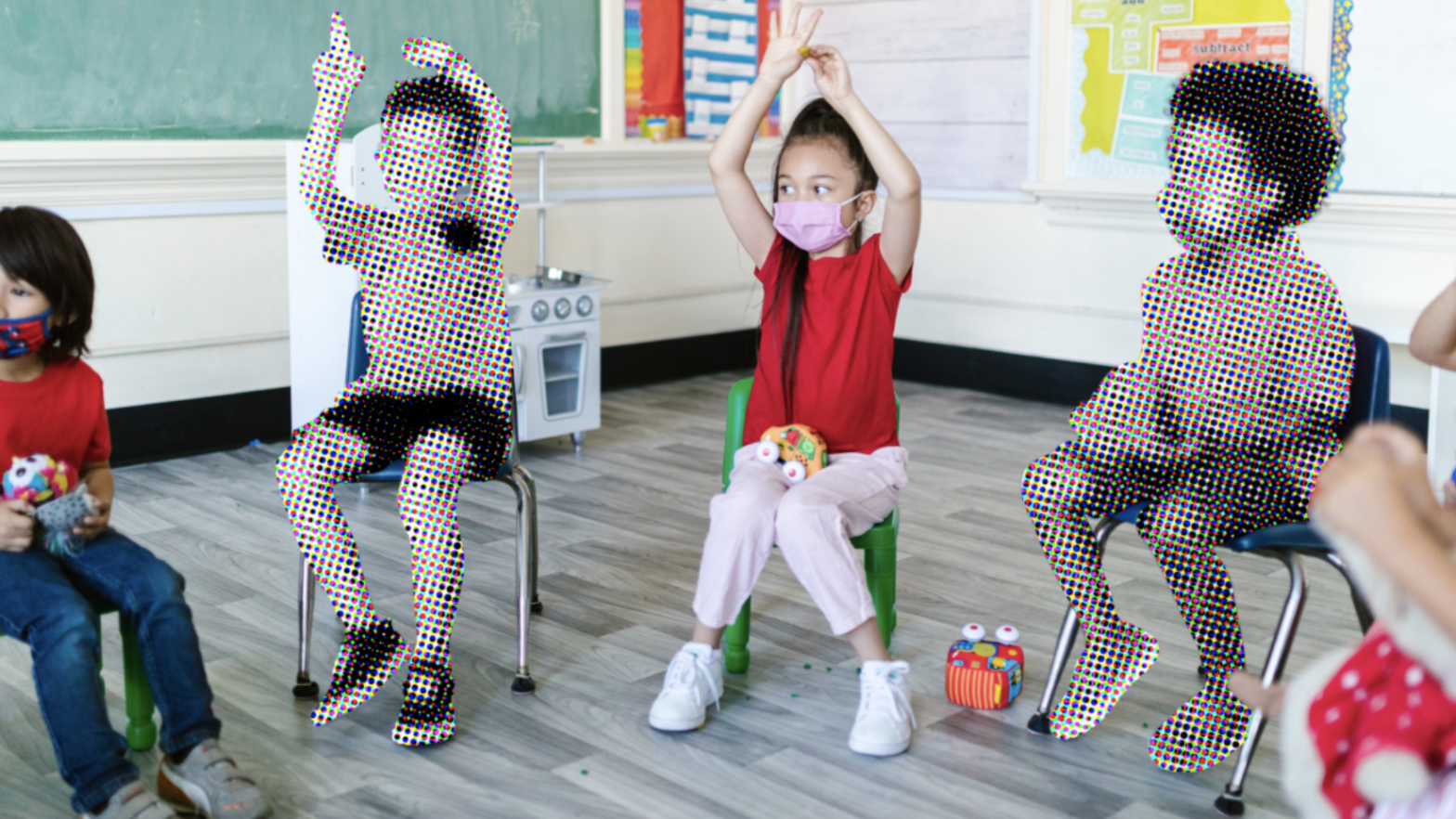
“We Know Suspensions and Expulsions are Bad for Preschool Students. What Are Some Alternatives?”
OH, Behave! Newsletter – April 2022
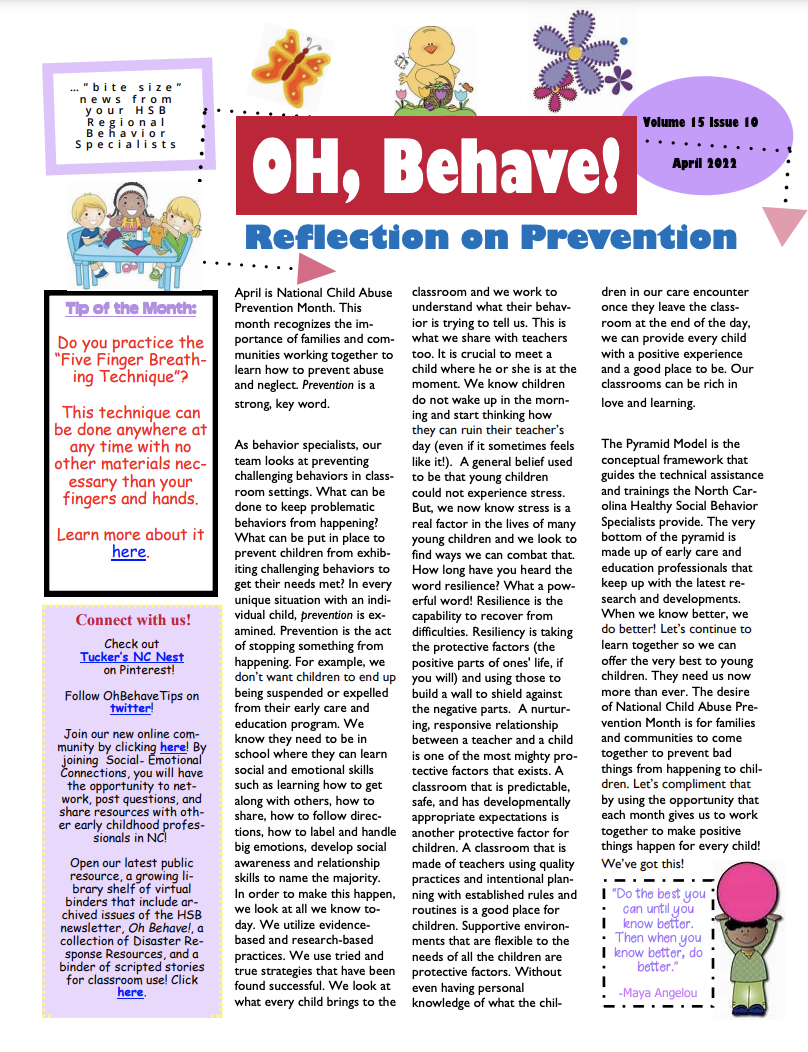
April is National Child Abuse Prevention Month. This month recognizes the importance of families and communities working together to learn how to prevent abuse and neglect. For more, make sure you check out our OH Behave! archived newsletters!
Using Choice and Preferences
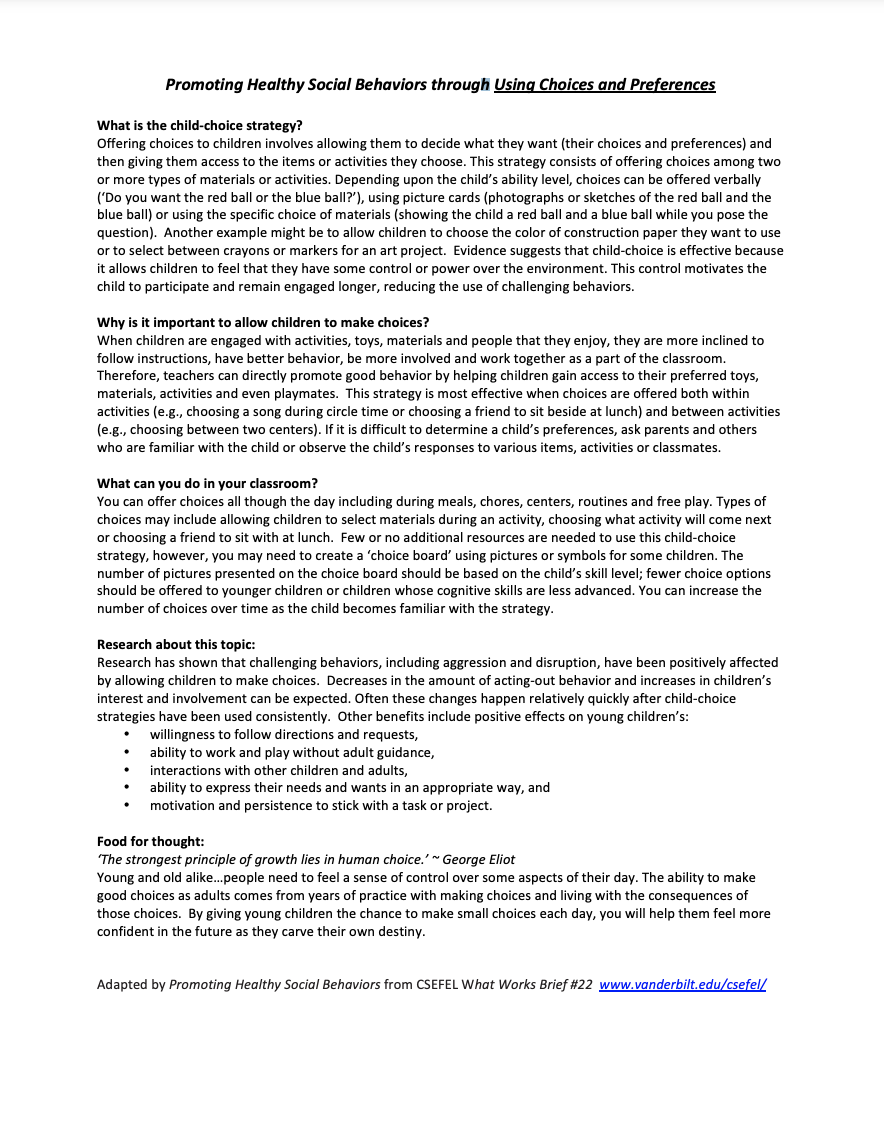
What is the child choice strategy, why is it important and what can you do in your classroom? Learn more in this report.
Strategies for Expressing Warmth and Affection to Children
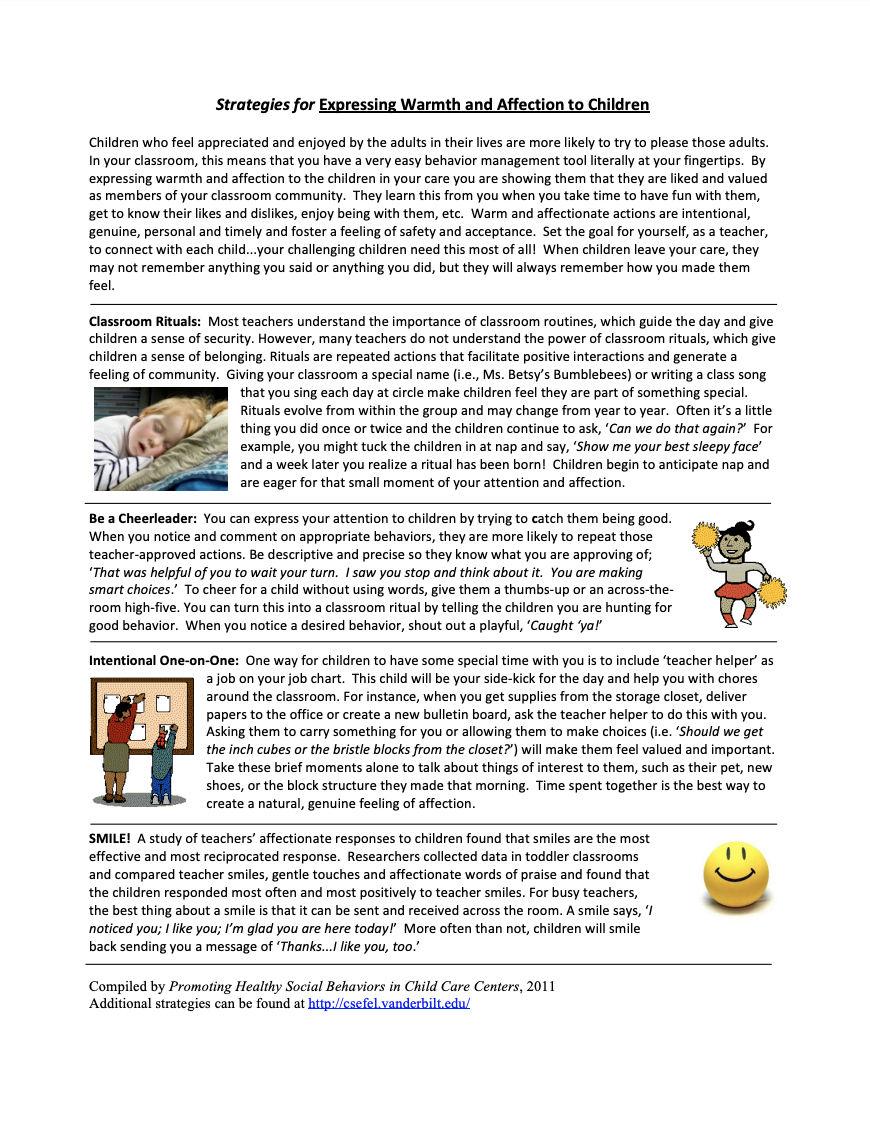
Children who feel appreciated and enjoyed by the adults in their lives are more likely to try to please those adults. In your classroom, this means that you have a very easy behavior management tool literally at your fingertips. Find some quick and easy strategies in this report.
Strategies for Fostering Emotional Literacy in Young Children
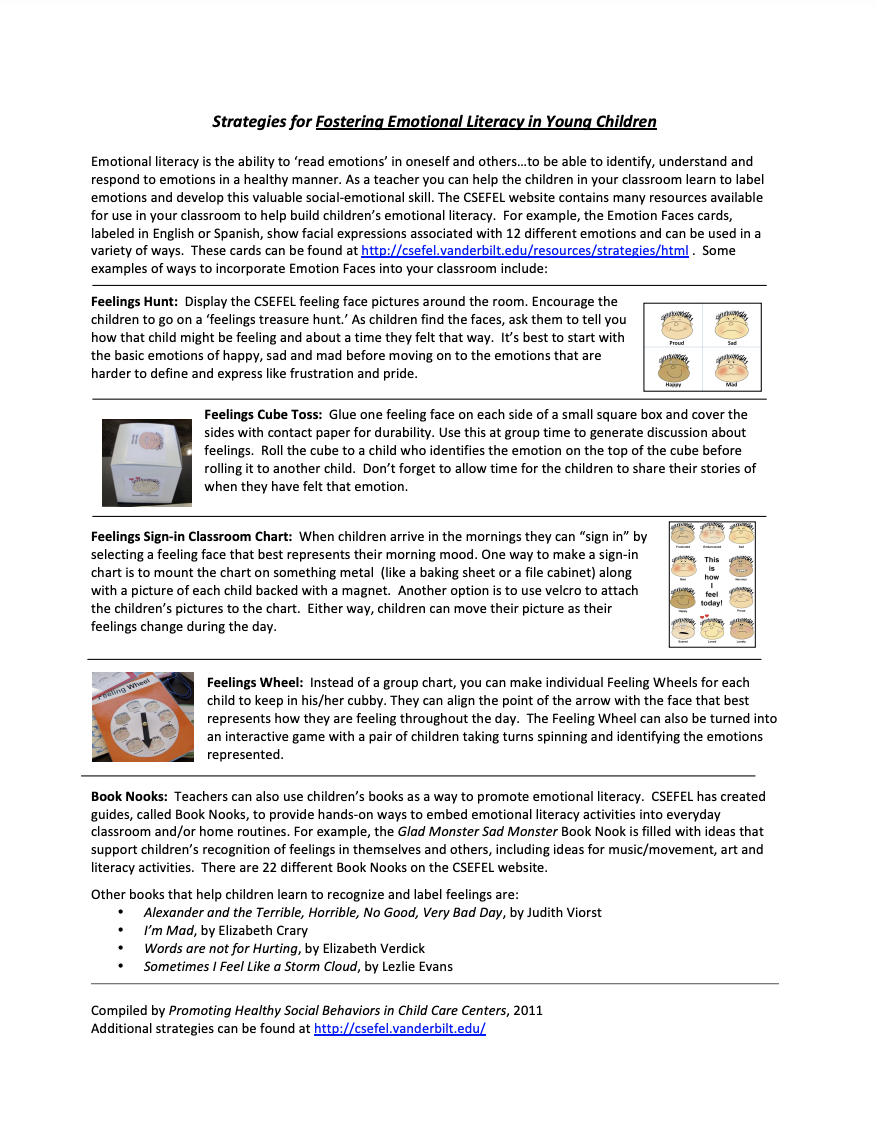
As a teacher you can help the children in your classroom learn to label emotions and develop this valuable social-emotional skill. This report provides examples of ways to incorporate “emotion faces” into your classroom as well as other strategies for fostering emotional literacy in young children.
Strategies for Helping Children Learn to Manage Their Own Behavior
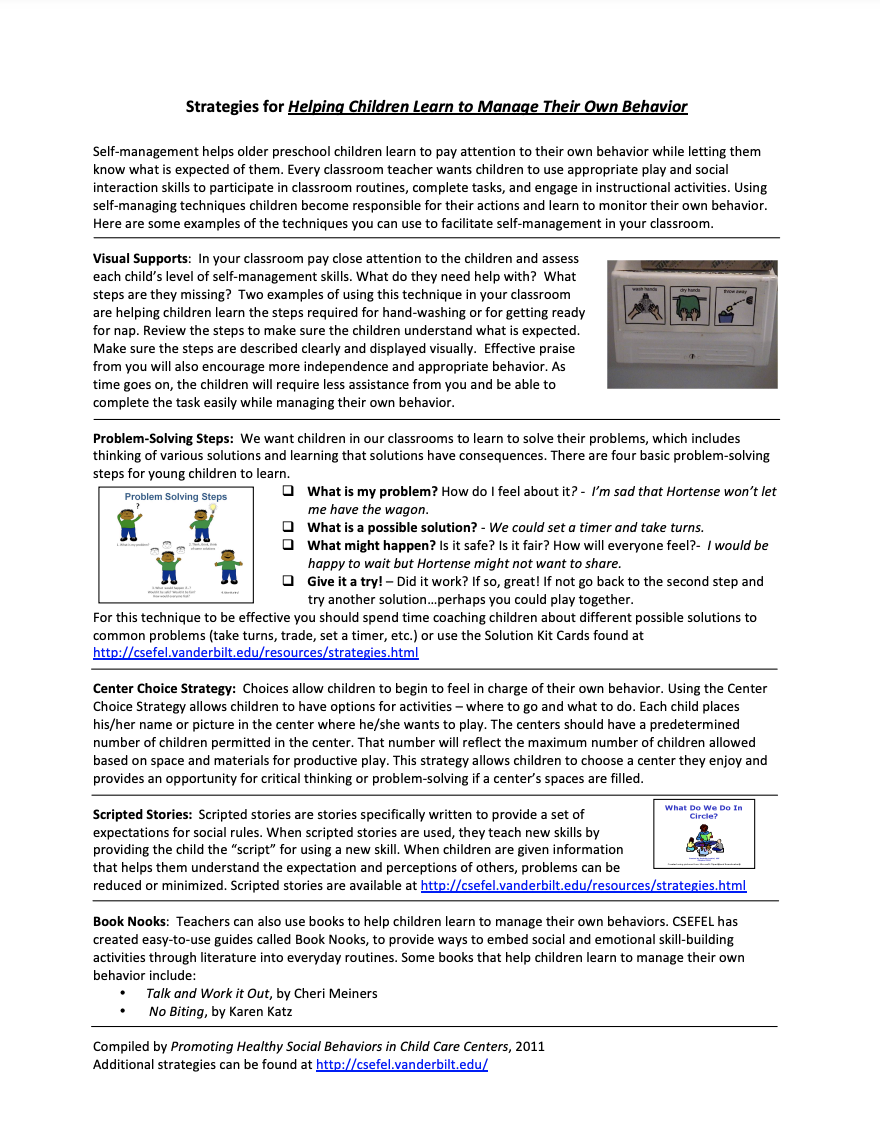
By using self managing techniques, children become responsible for their actions and learn to monitor their own behavior. This report provides examples of techniques you can use to facilitate self management in your classroom.
Strategies for Helping Children Make Transitions
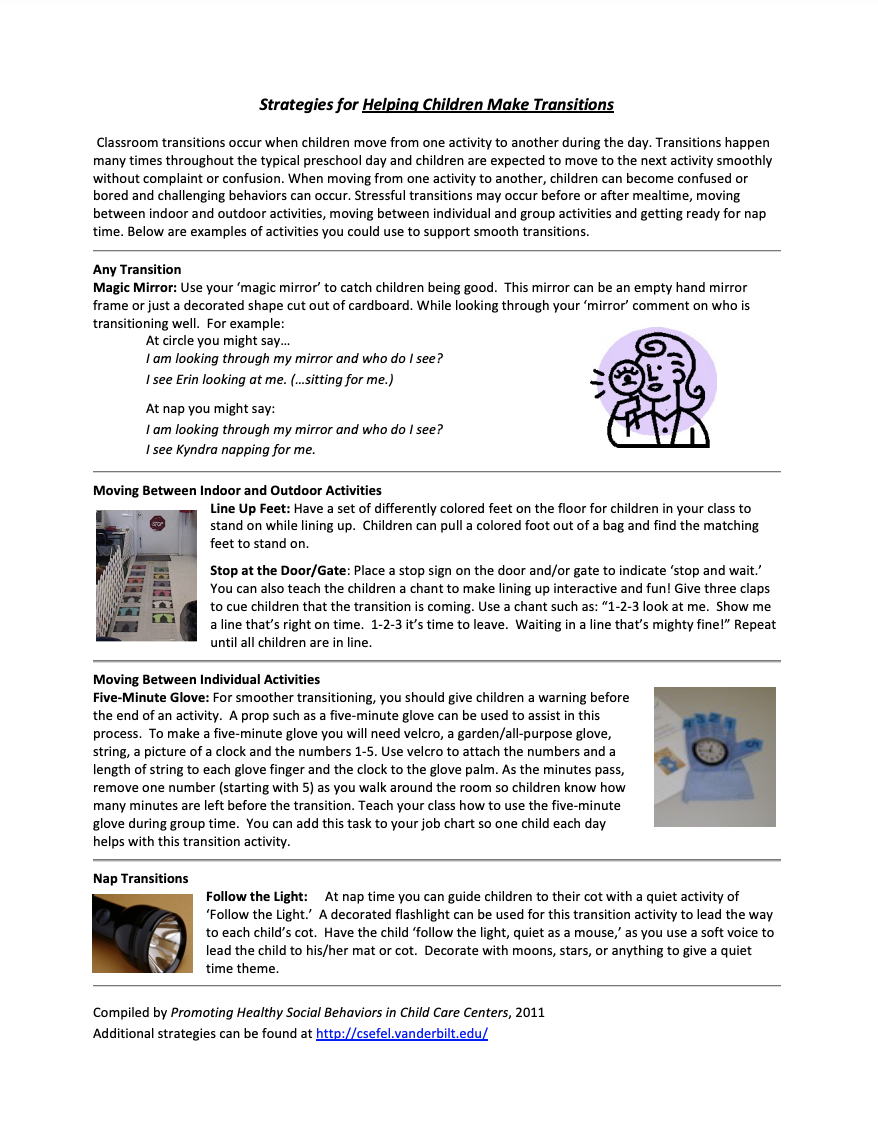
This report contains ideas for activities that you can use to support smooth transitions for children throughout the day.