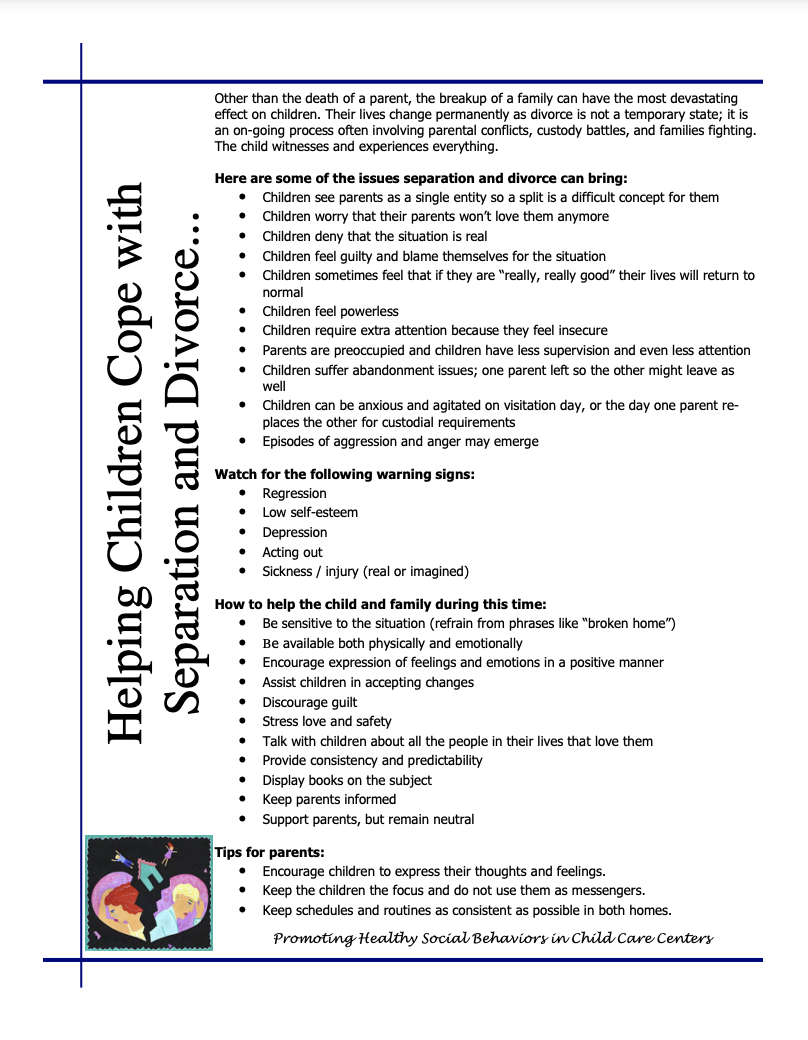
Other than the death of a parent, the breakup of a family can have the most devastating effect on children. Their lives change permanently as divorce is not a temporary state; it is an on-going process often involving parental conflicts, custody battles, and families fighting. The child witnesses and experiences everything.
Topic: Social-Emotional
Helping a Child Cope with Stress
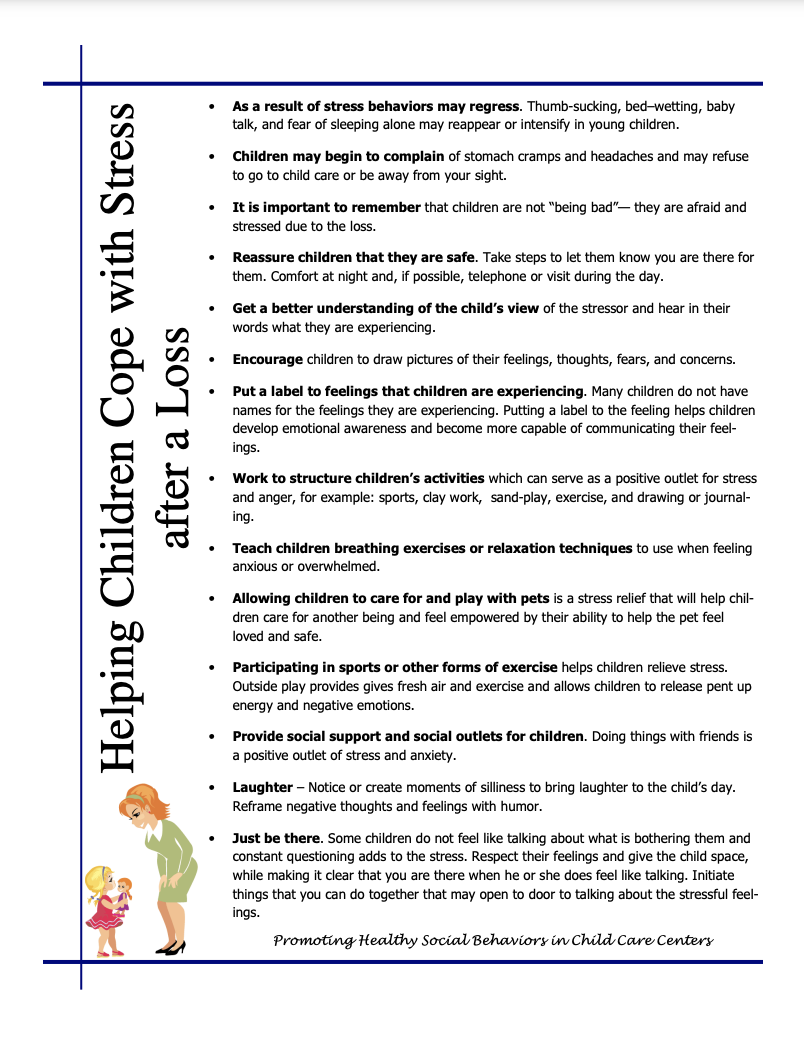
A variety of helpful tips for helping children cope with stress, especially after a loss.
What To Look For in a High-Quality, Inclusive Preschool Prosocial Learning Environment
One of the greatest benefits for children experiencing quality early care and education with other children is that he or she has the opportunity to develop his or her social skills. It is well known that children who can make and keep friends with adults and with other children are more likely to be successful… Continue reading What To Look For in a High-Quality, Inclusive Preschool Prosocial Learning Environment
Plays Well with Others: A Guide to a Young Child’s Social and Emotional Development
The information in this brochure is simply a guide to what is typical development, and what behaviors might be worth asking about. If a behavior seems unusual, happens over and over or goes on for a long time, this may mean your child needs extra help. Catching problems at an early age usually makes them… Continue reading Plays Well with Others: A Guide to a Young Child’s Social and Emotional Development
The Family Routine Guide (English)
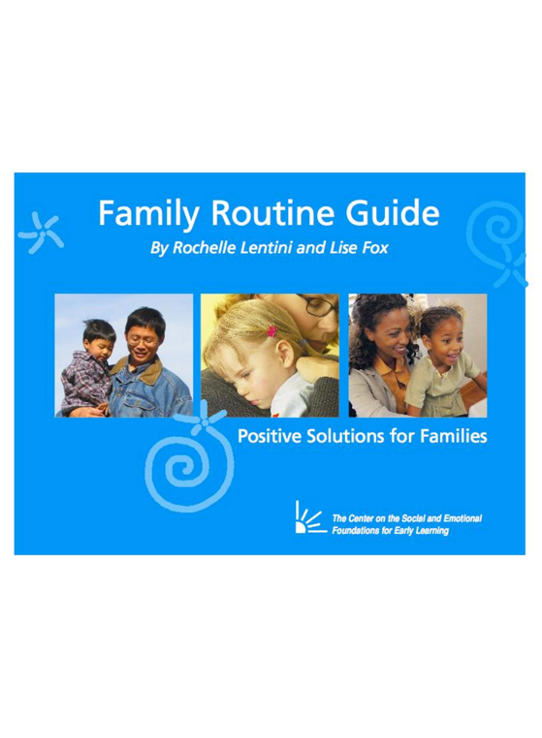
This Family Routine Guide was developed to assist parents and caregivers in developing a plan to support young children who are using challenging behavior. The Family Routine Guide includes strategies for the common routines and activities that occur during the family’s week, and contains family planning sheets.
Guía de Rutinas Familiares

Esta Guía de Rutinas Familiares se desarrolló con el fin de ayudar a los padres de familia y cuidadores a desarrollar planes para apoyar a niños pequeños que experimentan comportamientos difíciles. La Guía de Rutinas Familiares abarca estrategias para las rutinas y actividades que ocurren comúnmente todas las semanas en la vida familiar. Incluye hoja… Continue reading Guía de Rutinas Familiares
History of the National Center for Pyramid Model Innovations (NCPMI)

NCPMI extends and deepens the work of numerous faculty members and research scholars from multiple institutions who have contributed to the development of the Pyramid Model for Promoting Social and Emotional Competence in Infants and Young Children. Find out more about the NCPMI’s history.
Family Articles Resources – National Center for Pyramid Model Innovations

Access a range of valuable Family Article tip sheets on the following topics: Make the Most of Playtime Responding to Your Child’s Bite Teaching Your Child About Feelings – from Birth to Age 2 Teaching Your Child to Become Independent with Daily Routines Teaching Your Child to Cooperate with Requests Teaching Your Child to Identify… Continue reading Family Articles Resources – National Center for Pyramid Model Innovations
Making Life Easier Resources – National Center for Pyramid Model Innovations
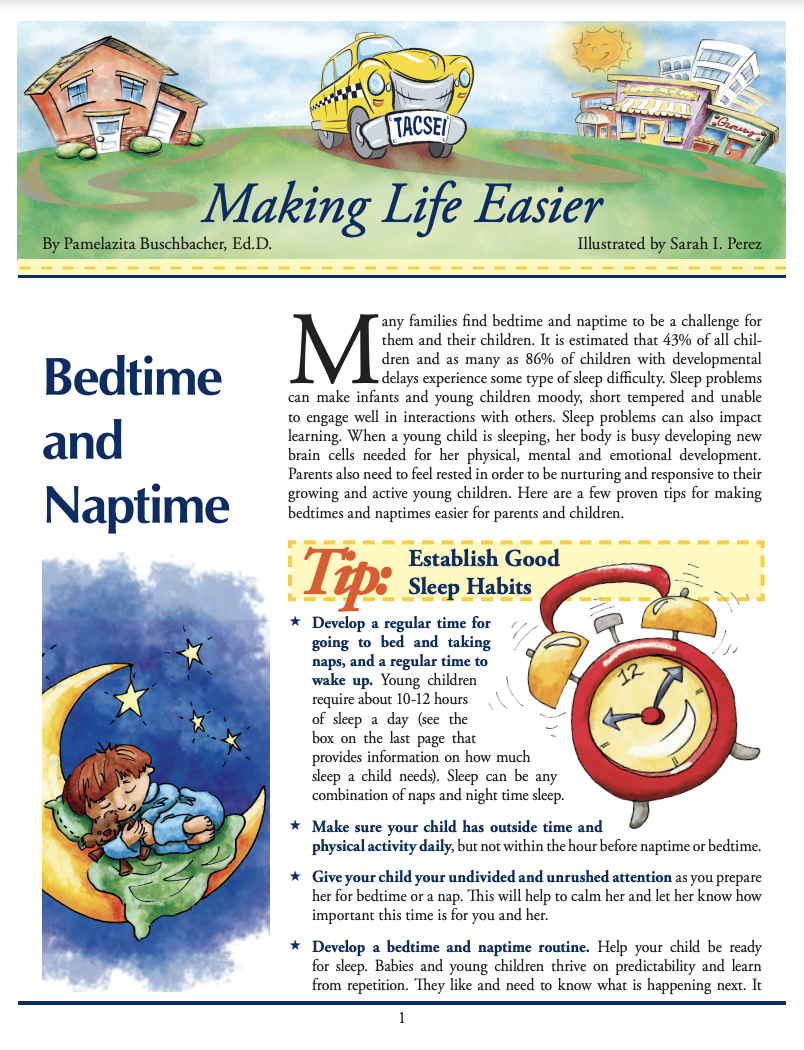
The “Making Life Easier” series is designed specifically for parents and caregivers. This series of tipsheets contains valuable information on how to make often challenging events easier to navigate, and even enjoyable, for both caregivers and children. Tipsheets are available in English, Spanish and Chinese. (View accordion near the bottom of the page)
Classroom Social Emotional Checklist for Parents
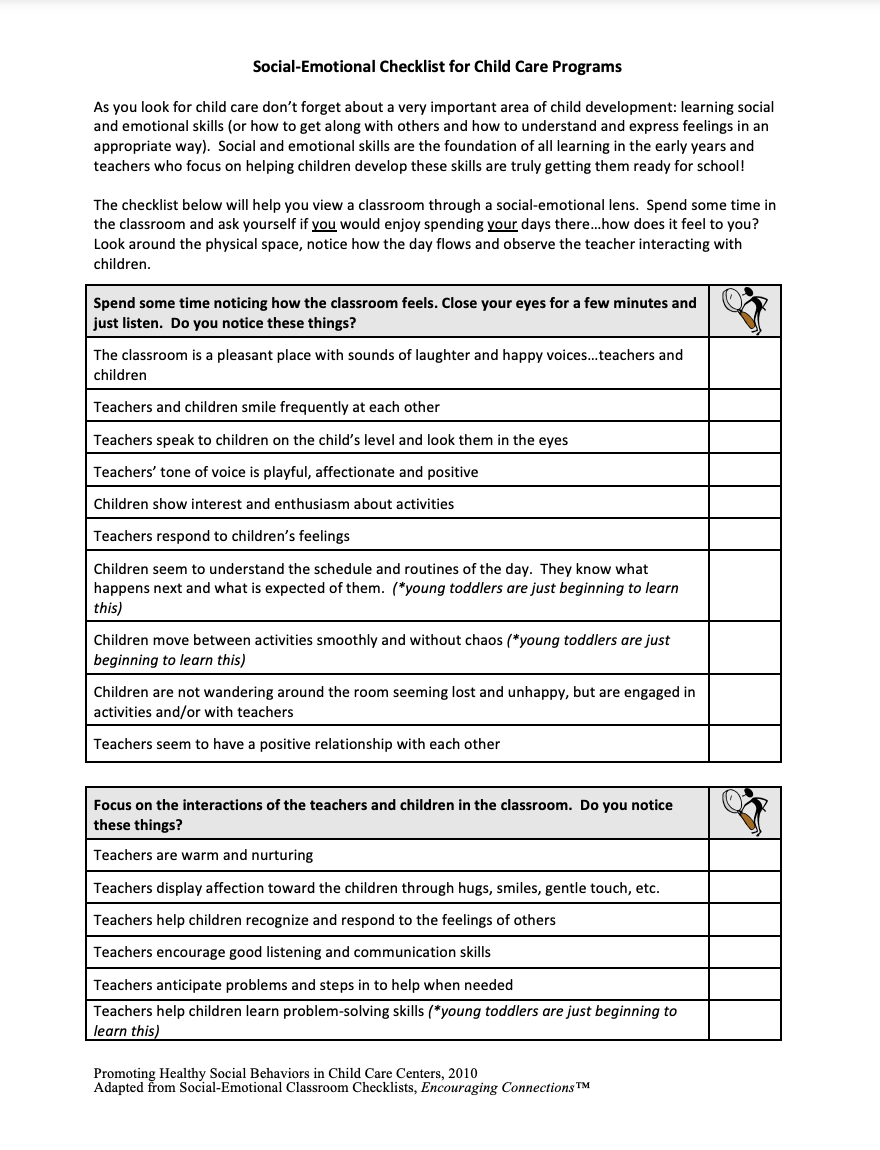
As you look for child care don’t forget about a very important area of child development: learning social and emotional skills (or how to get along with others and how to understand and express feelings in an appropriate way). Social and emotional skills are the foundation of all learning in the early years and teachers… Continue reading Classroom Social Emotional Checklist for Parents