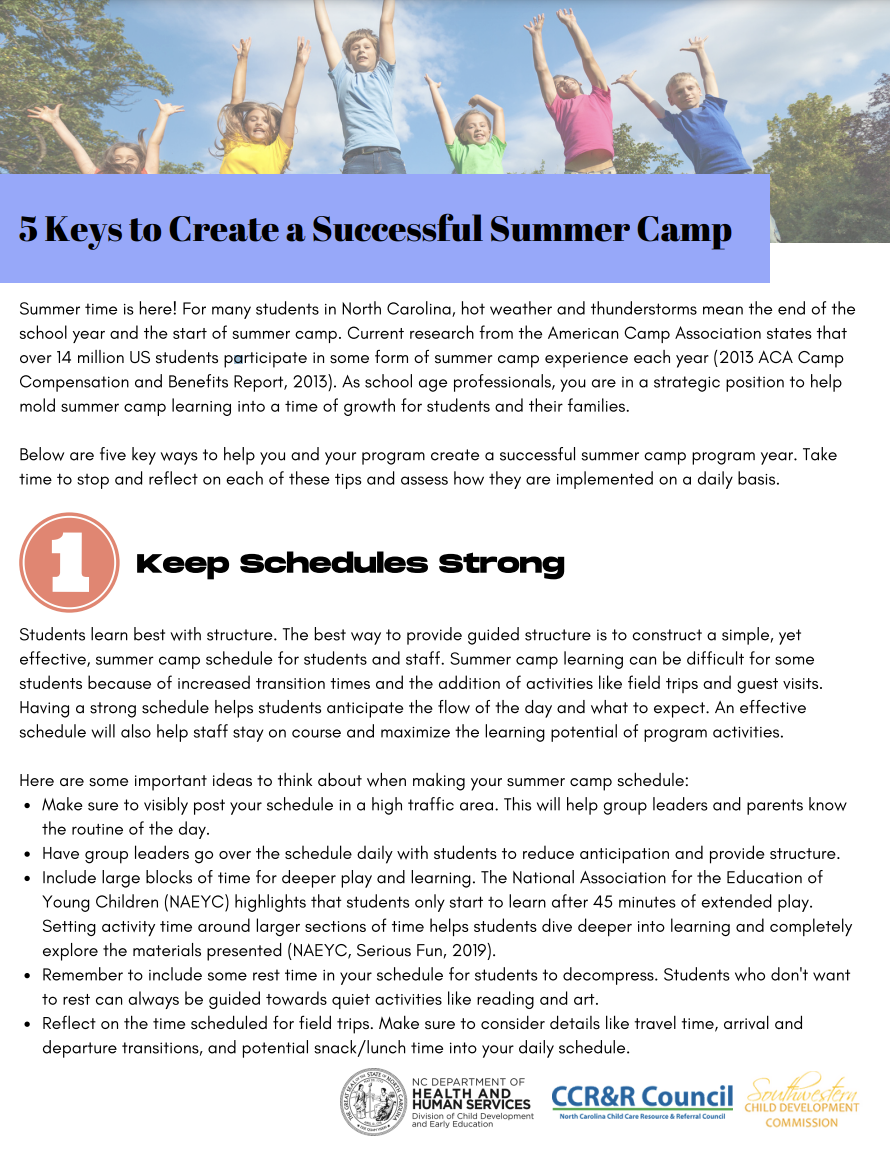
For many students in North Carolina, hot weather and thunderstorms mean the end of the school year and the start of summer camp. Current research from the American Camp Association states that over 14 million US students participate in some form of summer camp experience each year (2013 ACA Camp Compensation and Benefits Report, 2013).… Continue reading Five Ways To Create A Successful Summer Camp
Topic: School Age
NC School Age Trauma Resource Series – Section 3: Supporting Staff Resiliency
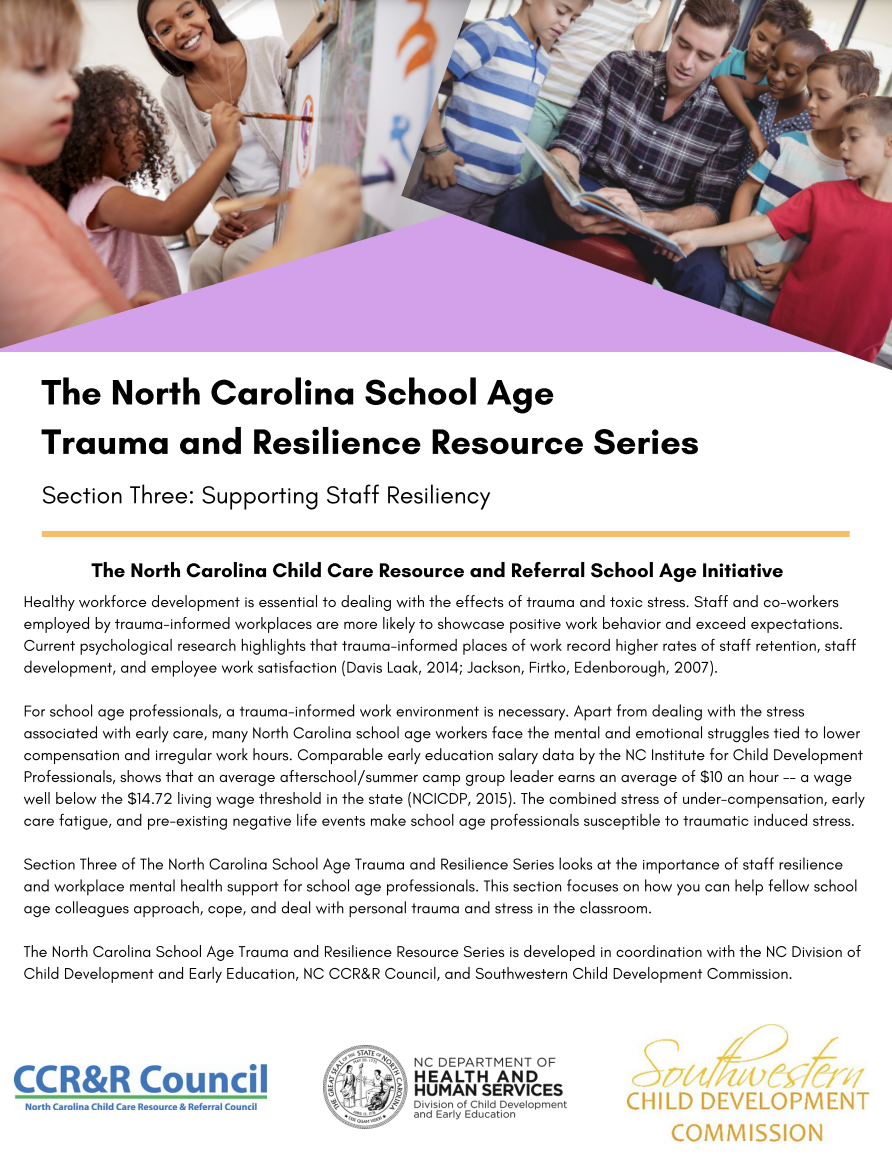
Healthy workforce development is essential to dealing with the effects of trauma and toxic stress. Staff and co-workers employed by trauma-informed workplaces are more likely to showcase positive work behavior and exceed expectations. Current psychological research highlights that trauma-informed places of work record higher rates of staff retention, staff development, and employee work satisfaction (Davis… Continue reading NC School Age Trauma Resource Series – Section 3: Supporting Staff Resiliency
NC School Age Trauma Resource Series – Section 2: Supporting Student Resiliency
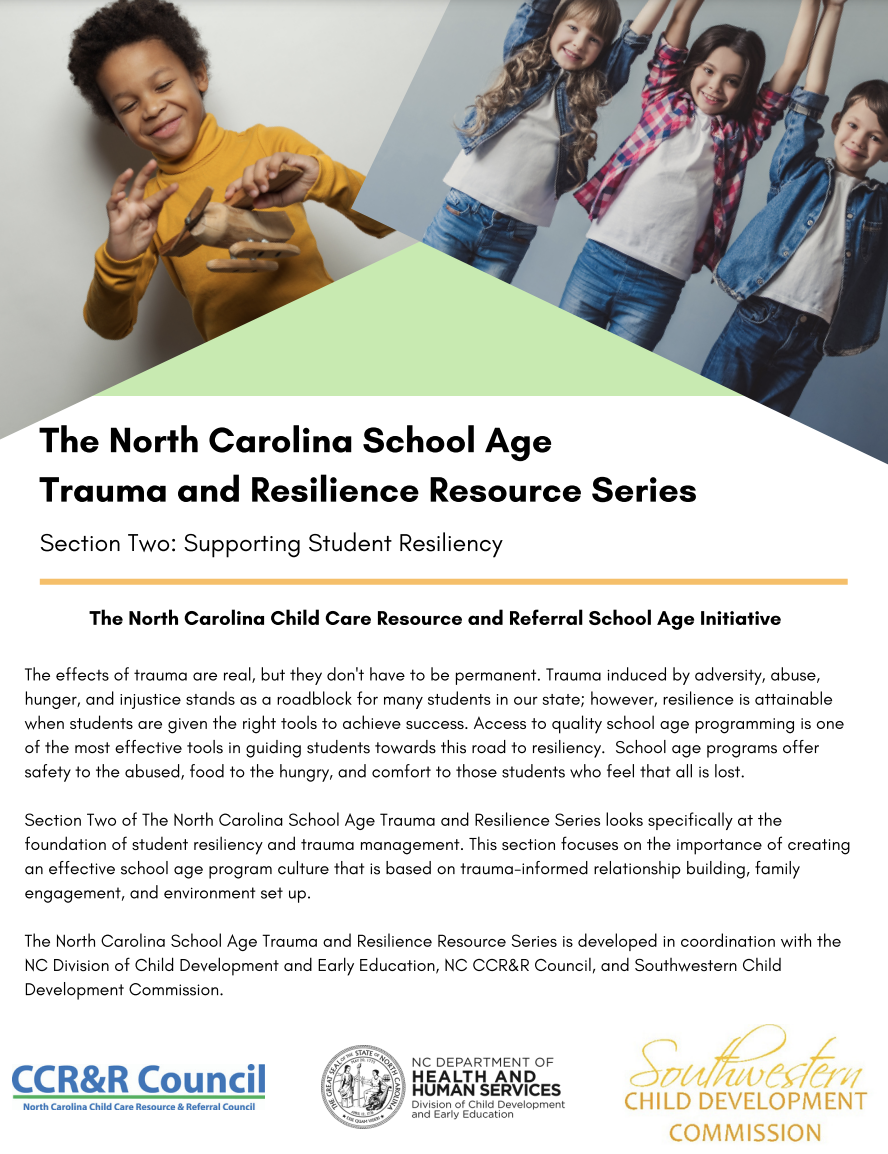
The effects of trauma are real, but they don’t have to be permanent. Trauma induced by adversity, abuse, hunger, and injustice stands as a roadblock for many students in our state; however, resilience is attainable when students are given the right tools to achieve success. Access to quality school age programming is one of the… Continue reading NC School Age Trauma Resource Series – Section 2: Supporting Student Resiliency
NC School Age Trauma Resource Series – Section 1: Understanding School Age Trauma
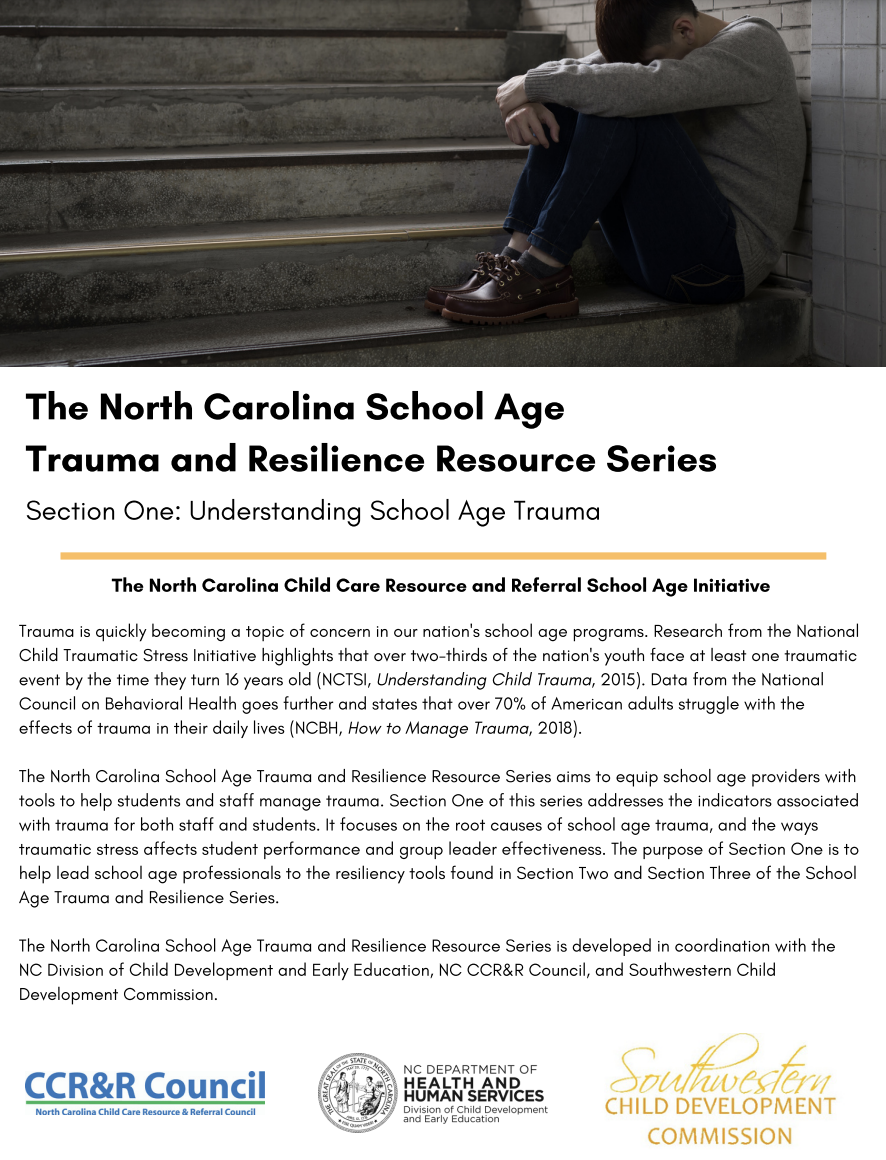
Trauma is quickly becoming a topic of concern in our nation’s school age programs. Research from the National Child Traumatic Stress Initiative highlights that over two-thirds of the nation’s youth face at least one traumatic event by the time they turn 16 years old (NCTSI, Understanding Child Trauma, 2015). Data from the National Council on… Continue reading NC School Age Trauma Resource Series – Section 1: Understanding School Age Trauma
7 Keys to Starting a Successful School Age Program
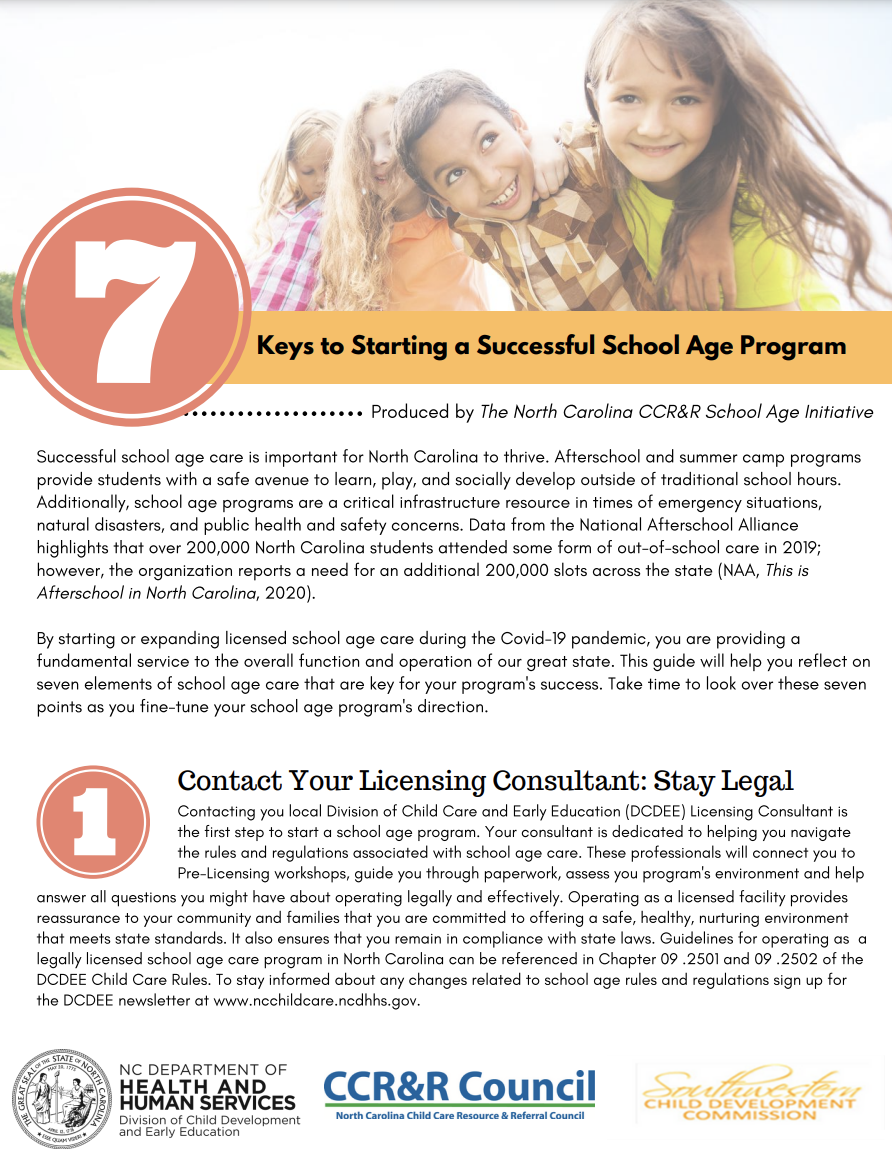
Successful school age care is important for North Carolina to thrive. Afterschool and summer camp programs provide students with a safe avenue to learn, play, and socially develop outside of traditional school hours. Additionally, school age programs are a critical infrastructure resource in times of emergency situations, natural disasters, and public health and safety concerns.… Continue reading 7 Keys to Starting a Successful School Age Program
School Age Guide to Positive Interactions
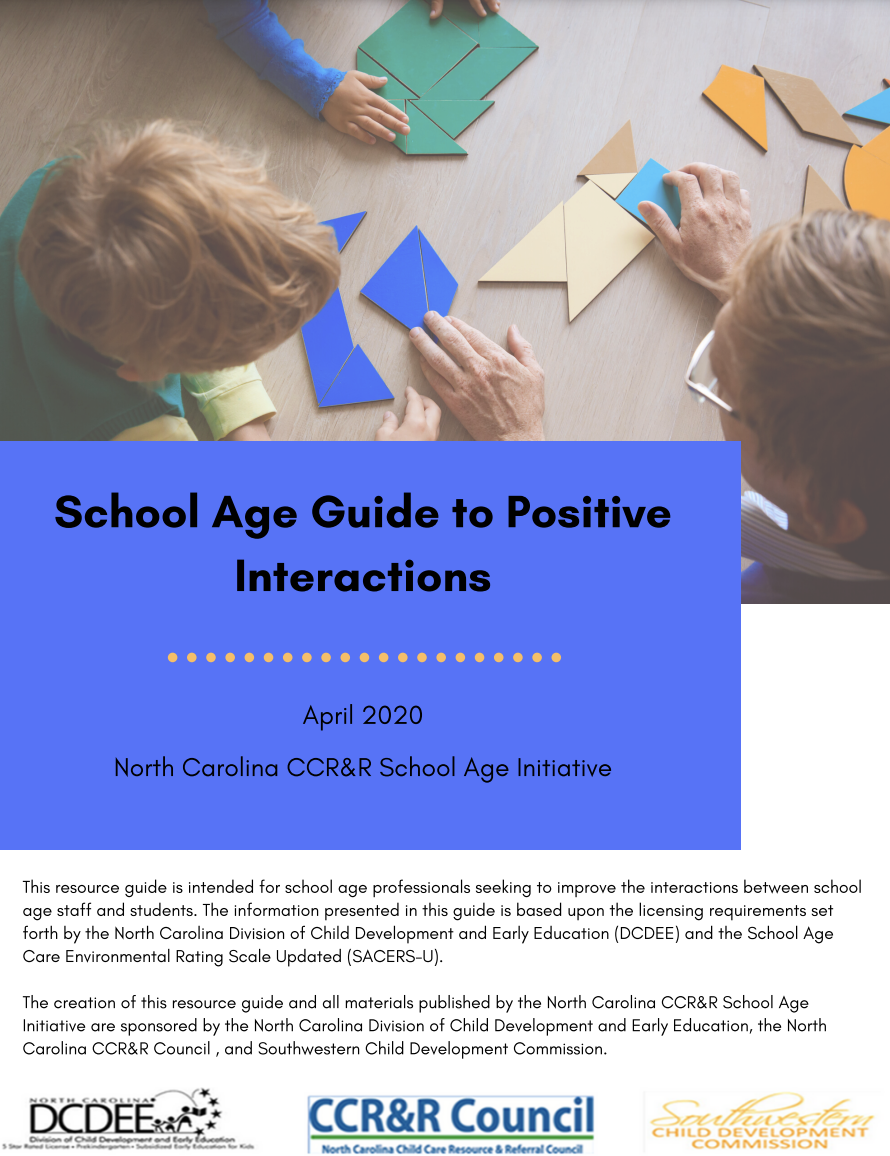
This resource guide is intended for school age professionals seeking to improve the interactions between school age staff and students. The information presented in this guide is based upon the licensing requirements set forth by the North Carolina Division of Child Development and Early Education (DCDEE) and the School Age Care Environmental Rating Scale Updated… Continue reading School Age Guide to Positive Interactions
School Age Guide to Space & Furnishings
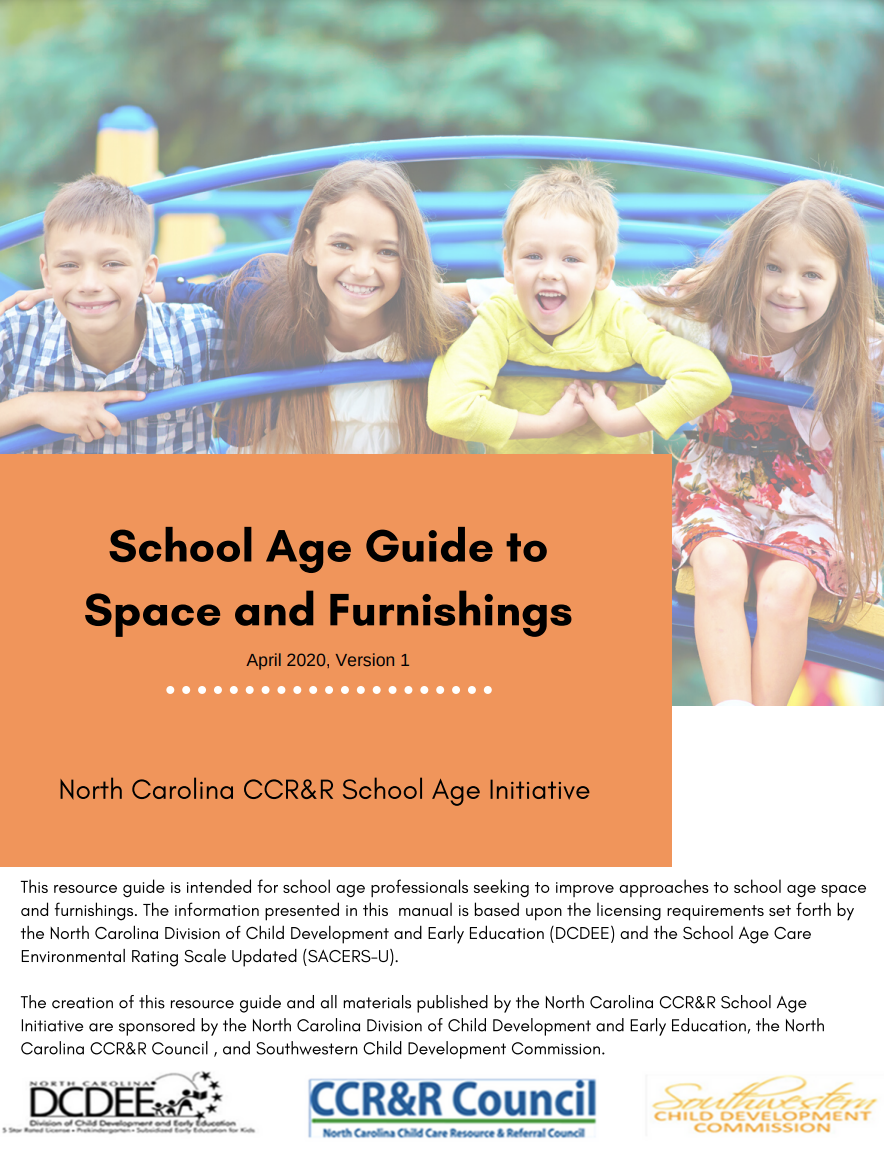
This resource guide is intended for school age professionals seeking to improve approaches to school age space and furnishings. The information presented in this manual is based upon the licensing requirements set forth by the North Carolina Division of Child Development and Early Education (DCDEE) and the School Age Care Environmental Rating Scale Updated (SACERS-U).… Continue reading School Age Guide to Space & Furnishings
School Age Materials Toolkit

Effective school age care environments require a diverse range of materials that must meet the needs of all enrolled students. Meeting these specific needs requires crafting activity areas geared for younger children, while simultaneously challenging older students in the group. For this process to flow smoothly, group leaders and program directors must think intentionally about… Continue reading School Age Materials Toolkit